Company Profile
A module house built around one cell type
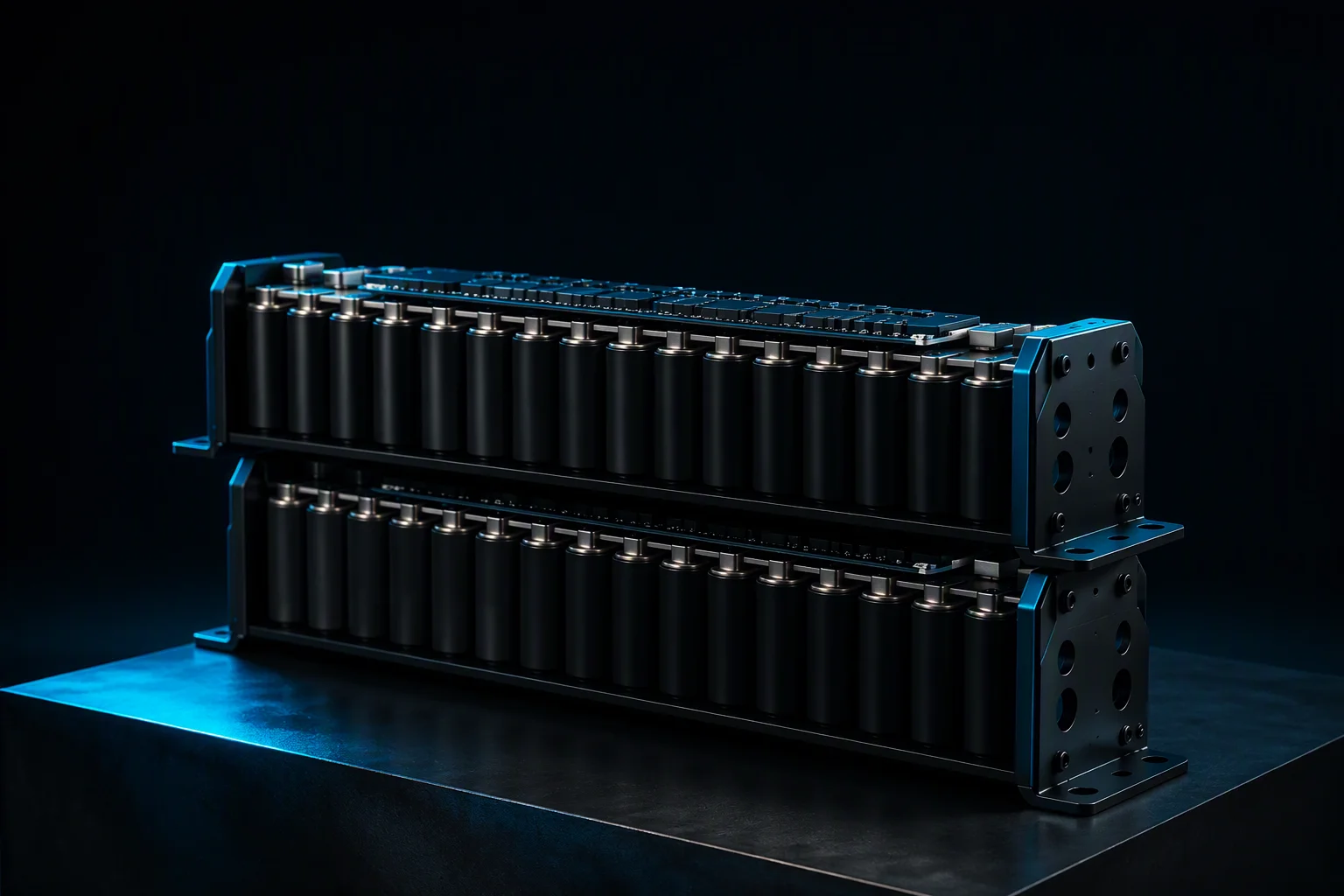
CapStack is a module manufacturer, not a cell foundry. We buy tier-1 lithium-ion capacitor (LIC) cells and finish the hard part ourselves: laser-welded busbars, C/ESR capacity sorting to a ±5% window, BMS integration and a test report in every box. One chemistry, five product lines — from 16V PSU packs to 182.4V high-voltage stacks — serving AI racks, grid, wind, rail, port and 48V mobility programs.
Positioning
Cell makers ship bare cells. Racks need finished modules.
The LIC cell is a mature component; what the market cannot buy off the shelf is the module around it. Cell factories run on volume economics and ship bare cells with an incoming tolerance spread of −10/+30% — ideal for their process, unusable for a power shelf that expects sixteen series cells to behave as one.
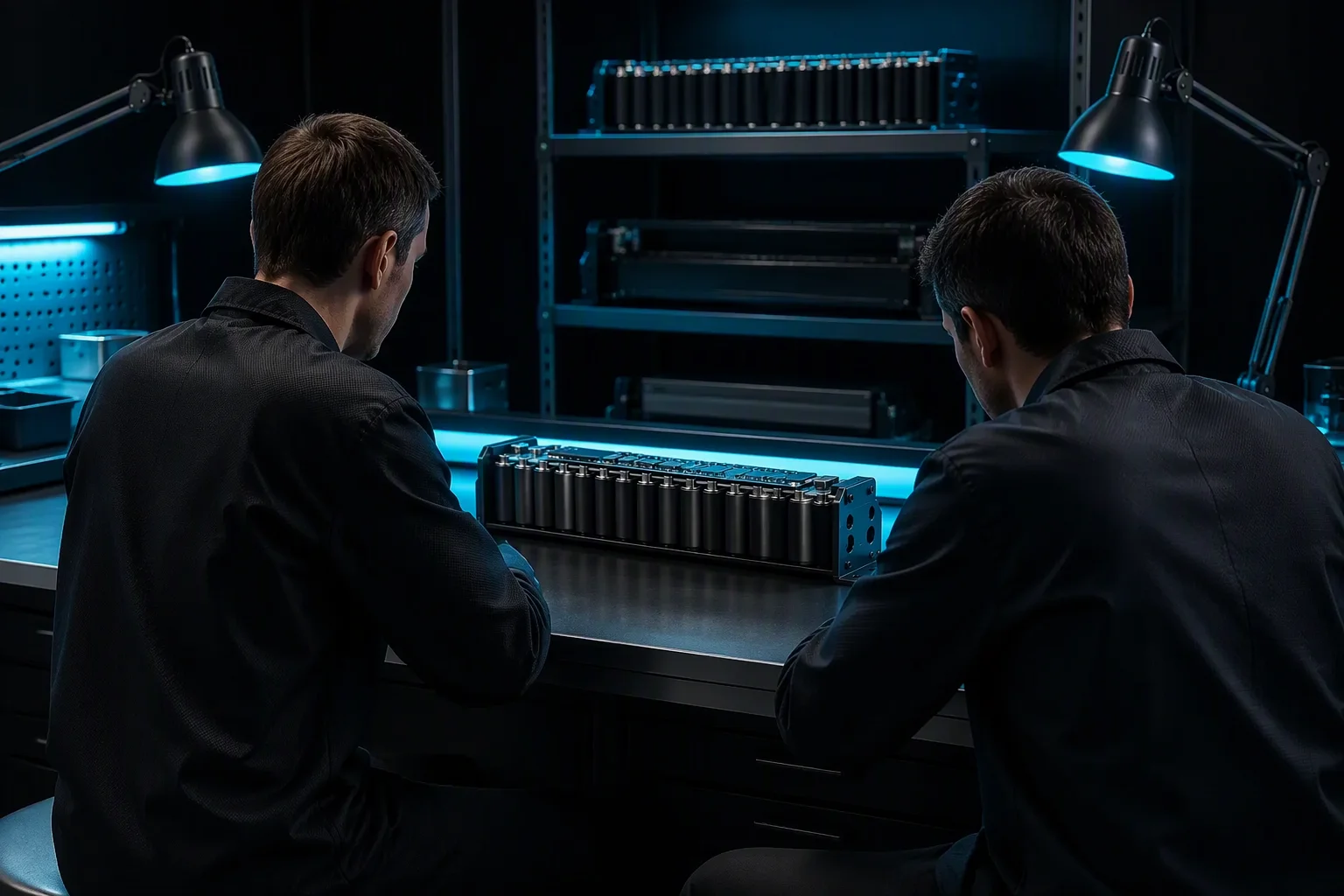
CapStack exists in that gap. We source cells from tier-1 manufacturers whose lines are RoHS, REACH and WEEE compliant, then put every cell through our own line: capacitance and ESR measured as a pair, binned into matched sets, laser-welded into busbar structures, fitted with balancing and telemetry electronics, aged, and 100% final-tested before packing.
The output is a product, not a BOM line: the RackBridge 48V for AI racks, PSU 16V packs, 125–182.4V high-voltage modules, 12–24V low-voltage units and cell-to-cell custom ODM from 16–108V — with the engineering desk behind all five. Because we build around a single chemistry, every lesson learned on the sorting line compounds instead of diluting.
The chemistry choice is deliberate. LIC stores roughly 10× the energy of a same-size EDLC, carries a 500,000+ cycle class at a 3.5 V window, cranks at −40 °C and has no thermal-runaway mode — a physics argument, not a warranty clause.
Milestones
Five years, one direction
No founding myth, no fictional contracts — just the line, getting wider and tighter at the same time.
2021
Module line commissioned
First busbar line goes live: cylindrical LIC cells laser-welded into 16S structures for low-voltage backup modules.
2023
Sorting line phase 2
C/ESR dual-parameter measurement automated; bins tightened from the −10/+30% incoming spread to a ±5% module window.
2024
Laser-welding automation
Weld stations automated and joint resistance logged per weld — surge current class >500 A became a catalog number, not a custom job.
2025
AI rack pilot program
48V modules enter a rack-integrator pilot fleet; per-cell voltage and CAN telemetry logged for the full pilot duration.
2026
48V module line at scale
RackBridge 48V moves to standard 4–6 week lead time, with a test report attached to every serial number that leaves the floor.
Company in numbers
What we run on

See it before you sign it
Every module ships with its birth certificate.
Ask for a sample run and the ±5% sorting data, weld records and aging log travel with the carton — read the paperwork before the purchase order.