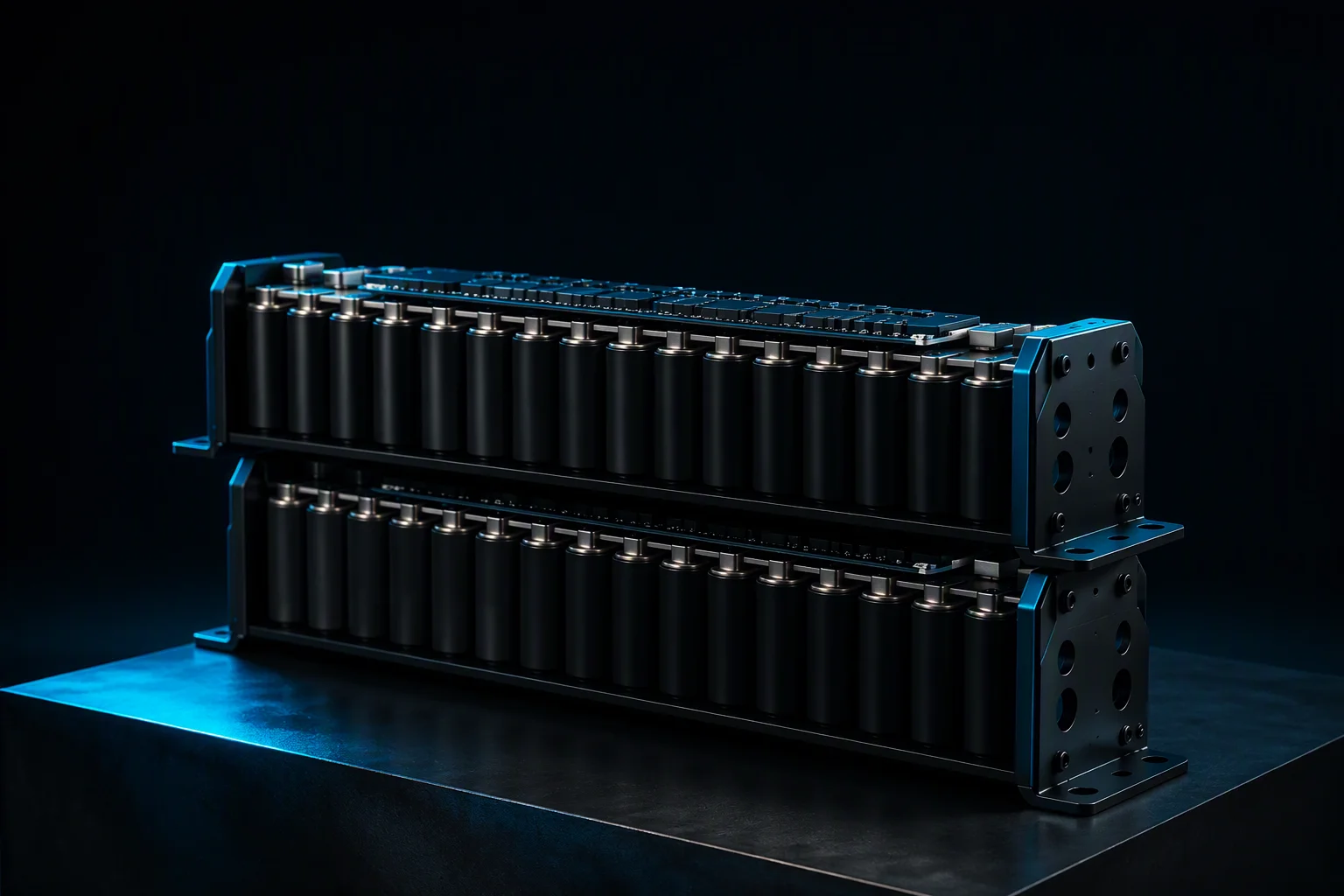
HIGH VOLTAGE · 125–182V
StackLine HV — module to 1000 V system
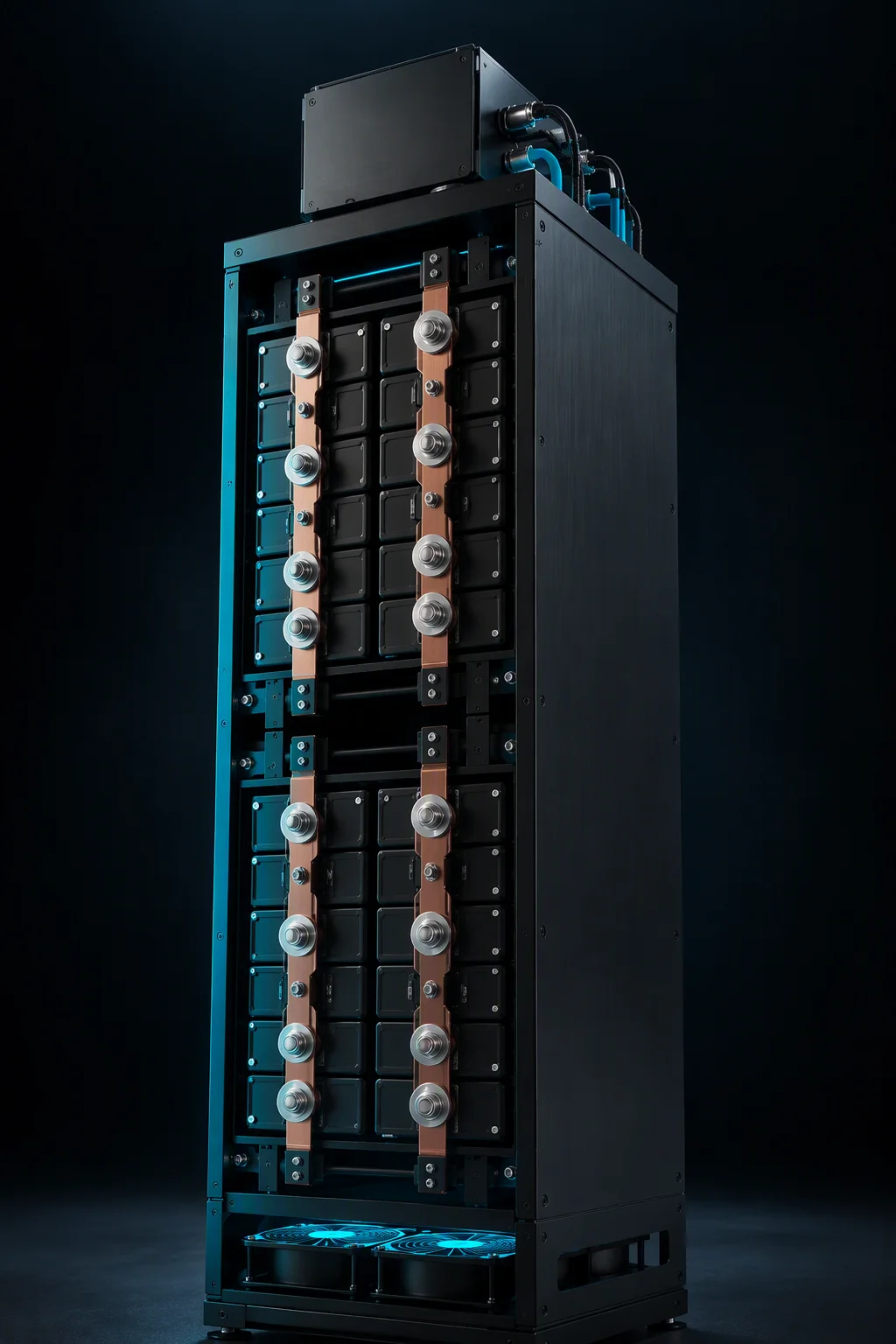
StackLine HV is the high-voltage branch of our LIC hybrid supercapacitor module family: 125.4–182.4 V per module, and eight modules in series reach a 1000 V-class DC system. Fused busbars, a CAN node on every module and 3 mm forced-air ducting between cells come built in — series voltage climbs without the integration risk doing the same.
At a glance
Four numbers carry the family
Forty-eight 3.8 V cells; a 33S build gives 125.4 V for lower buses.
Cells C/ESR sorted to a ±5% window before the string is welded.
Insulation proof level every module passes before it leaves the line.
Forced-air option keeps tall strings inside thermal margins.
Datasheet
StackLine HV specification
Module ratings below; system-level series counts, fuse coordination and thermal plans are engineered per cabinet in the RFQ cycle.
| Parameter | Value |
|---|---|
| Module configurations | 125.4 V class (33S) – 182.4 V class (48S) |
| Capacitance class | 62.5 F class (48S flagship), ±5% C/ESR sorted |
| Cell | 3.8 V large-cell LIC, weldable terminals |
| Cascade | Up to 8 modules in series → 1000 V-class system |
| Protection | Fused busbars, per-module FUSE |
| Monitoring | CAN 2.0B: per-cell voltage + module temperature |
| Alarms | Over-charge / over-discharge / over-temp, error signal output |
| Cooling | Natural air standard; forced-air option with 3 mm cell ducts |
| Surge current class | Cell-level 450 A; module surge per configuration |
| Response tier | 1–50 ms transient absorption |
| Insulation / hipot | AC 2000 V for 1 min |
| Operating temperature | −40 … +65 °C |
| Storage temperature | −40 … +80 °C (0 … +35 °C recommended) |
| Cycle life class | 500,000+ cycles in a 3.5 → 2.5 V window |
| Certification route | UL 810A cell route · IEC 62391 methods · CE DoC |
| Shipping documents | UN 3499 Class 9 · IATA A186 / PI 971 |
Cabinet arrays
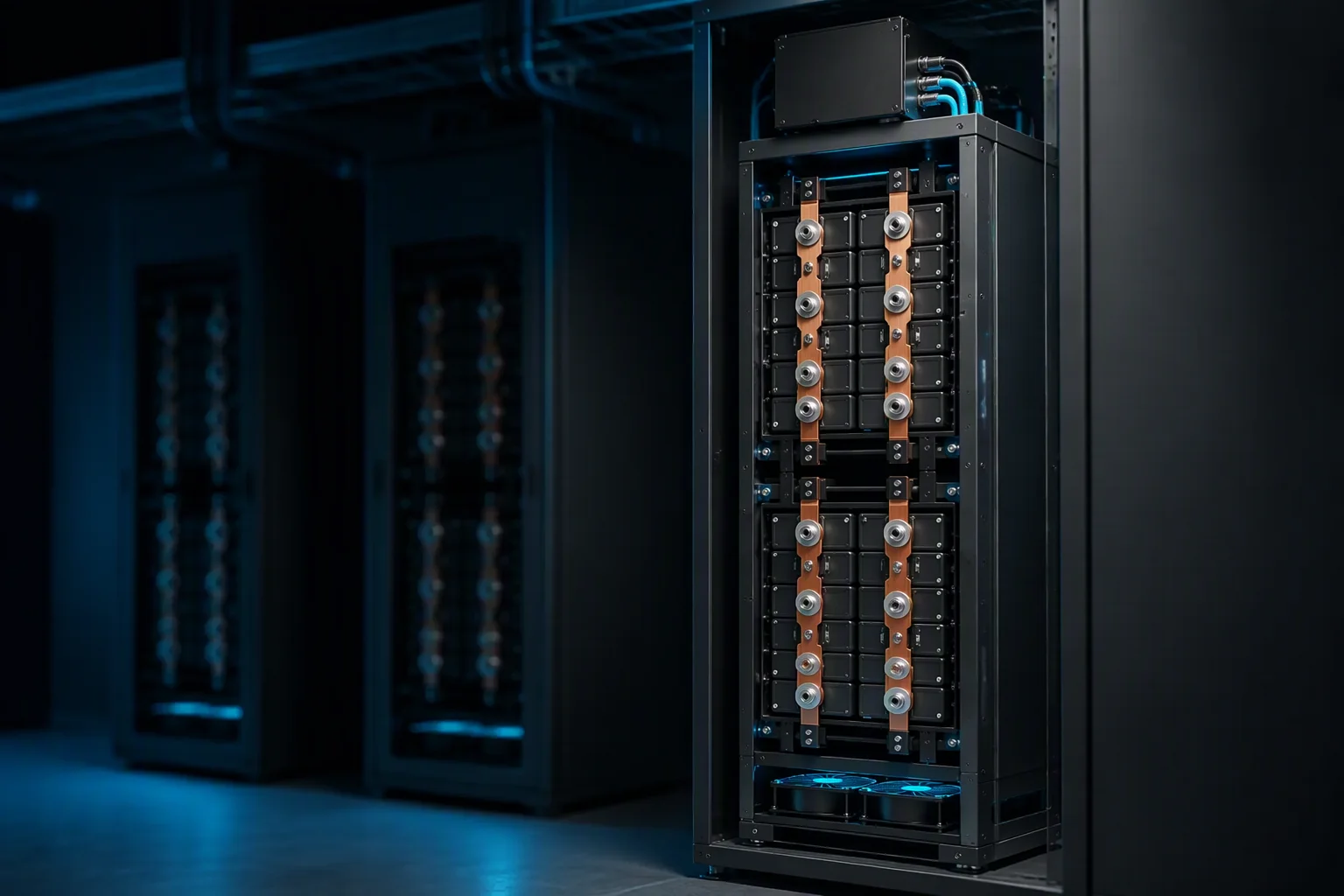
Cascade to 1000 V without reinventing the rack
Series strings raise voltage faster than they should raise risk, so each StackLine HV module carries its own FUSE and its own CAN node: the controller sees every cell, and a faulted module isolates instead of propagating. Tall forced-air builds keep 3 mm ducts between cells; insulation is proven at AC 2000 V for one minute, and storage spans −40 … +80 °C with 0–35 °C recommended.
This is the same architecture class the grid side already trusts — a 5 MW supercapacitor BESS has run in commercial operation since 2023. For UPS bridge tiers, genset-start support and transit power, the ladder is the same: LIC responds in 1–50 ms while slower assets wake up behind it. And because large-cell ESR sits as low as 0.47 mΩ (DC), the surge current still lands inside the first half-cycle — your fuse plan coordinates the event instead of compensating for it.

Start the conversation
Tell us the DC bus. We'll count the modules.
125 V or 1000 V class, the RFQ returns inside 48 hours with a series count, a capacitance class and a thermal plan — fuse coordination included.