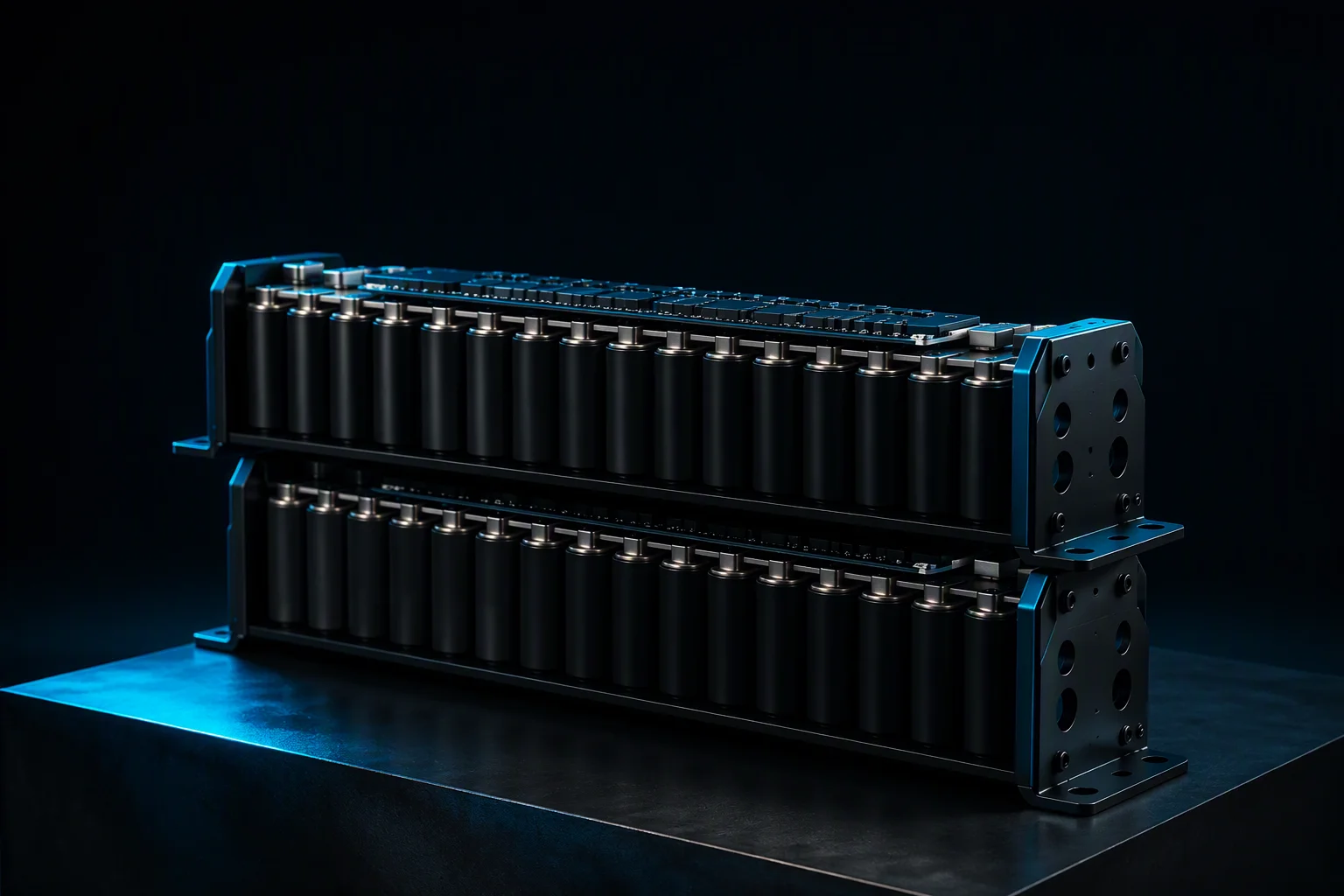
Quality System
Paper trail included
A supercapacitor module is only as strong as its documentation. CapStack measures capacitance and ESR per IEC 62391 methods, holds modules to a ±5% matched-bin window, and attaches a test report to every serial number — with an eight-name compliance wall your procurement team can quote from.
Bench & screening
Twelve checks before a module gets a label
Incoming cells, in-process modules and finished units all pass through the same bench logic. These are the checks, the methods and the bar each one has to clear.
| Check | Method & condition | What passes |
|---|---|---|
| 1 · Capacitance | IEC 62391 DC measurement, per cell and per module | Inside the ±5% matched-bin window |
| 2 · ESR, DC | IEC 62391 DC method, four-terminal | 0.47 mΩ-class floor held on large-format cells |
| 3 · Leakage current | Rated voltage applied, stabilized reading | Below the datasheet ceiling for the cell class |
| 4 · Self-discharge | Open-circuit rest, 72 h hold | ≥3.7 V retained on 3.8/4.0 V cells |
| 5 · Temperature characteristics | C/ESR swept across chamber points, −40 … +70 °C | Derating curve inside the published envelope |
| 6 · Insulation withstand | 2 kV AC between busbar assembly and chassis | No breakdown; leakage within limit |
| 7 · Vibration endurance | Sinusoidal sweep, module mounted as shipped | No loosening; telemetry and alarms intact |
| 8 · Terminal strength | Pull and bend loads on terminals and busbars | No cracking; ESR drift within budget |
| 9 · Aging screening | Controlled load and temperature rest on the line | Parameters settle inside the bin window |
| 10 · Balancing function | Forced imbalance at BMS level | Window restored; module-to-module auto-balance works |
| 11 · Alarm & telemetry | Over-charge / over-discharge / over-temp three-level logic | Alarm tiers fire; error output asserts correctly |
| 12 · Final inspection | 100% of modules, locked to serial number | Test report generated, packed with UN 3499 docs |
Compliance wall
Eight names your compliance team will ask for
Cell route
UL 810A
Cells are sourced through UL 810A-recognized capacitor cell routes, the entry ticket for North American programs.
Test methods
IEC 62391-1 / -2
Capacitance, ESR and leakage are measured per IEC 62391 fixed capacitor methods — general and power applications.
Automotive
IEC 62576
Vehicle programs are quoted against IEC 62576 test methods for electrochemical capacitors in road applications.
EU substances
RoHS
Cell supply chains run RoHS-compliant lines; declarations are available per shipment class on request.
Chemicals
REACH
SVHC screening covers cells, busbars and enclosure materials across the bill of materials.
End of life
WEEE
Modules are classified for WEEE take-back streams, with disassembly guidance shipped on request.
EU market
CE DoC
A Declaration of Conformity is issued for modules placed on the EU market — a declaration, not a sticker.
Transport
UN 3499 docs
Class 9 packing, IATA A186 / PI 971 air provisions and per-carton documents for shipments above 0.3 Wh.
Inside the lab
Chambers, benches and a serial-number habit
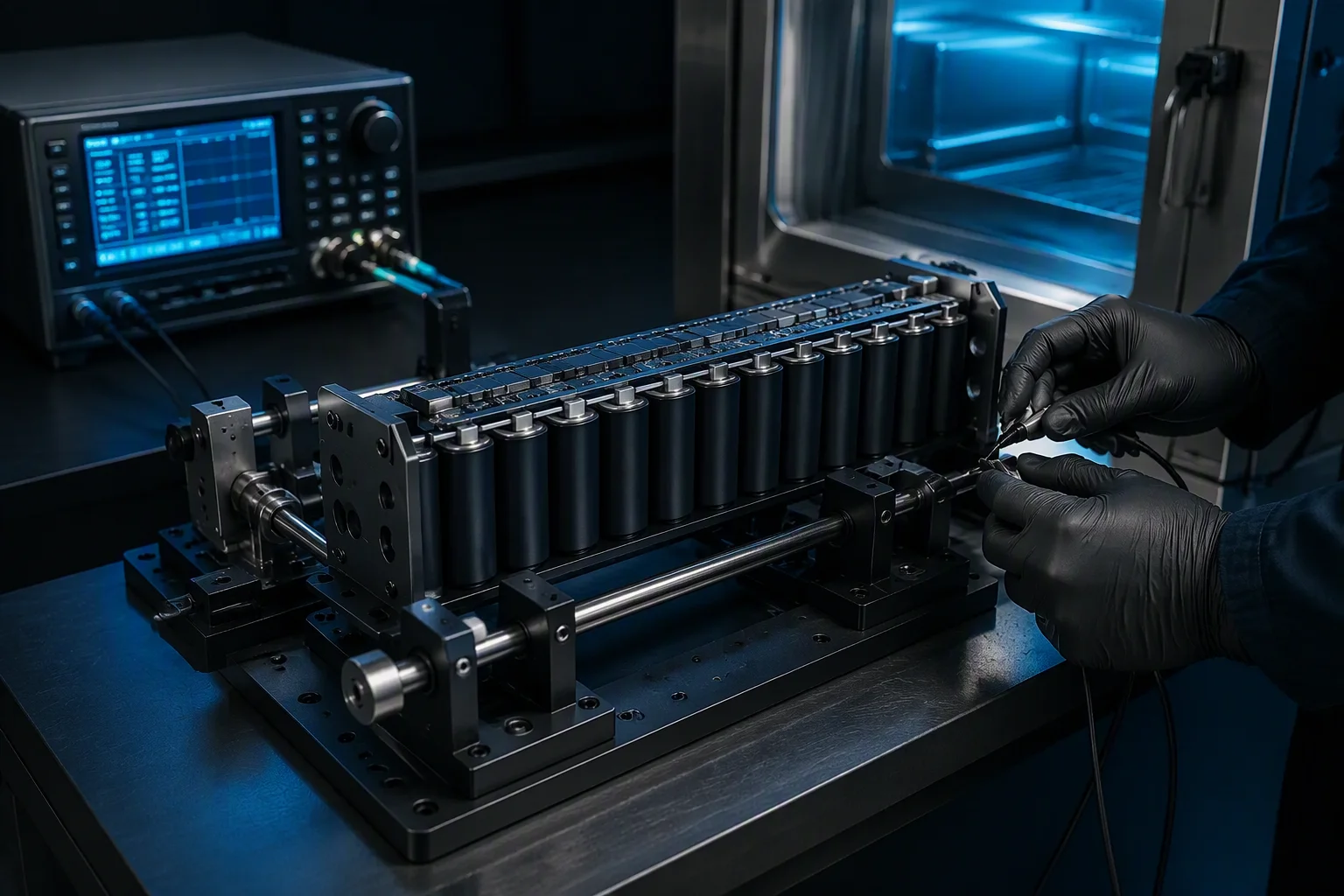
Three chamber tiers cover the −40 … +70 °C envelope so temperature-characteristic runs never queue behind each other. Self-discharge benches hold cells through 72-hour rests and read back the ≥3.7 V retention figure that separates a good LIC lot from a mediocre one.
Down the bench, hipot stations push 2 kV AC through insulation, vibration rigs shake modules exactly as they will ship, and balancing rigs force faults at the BMS to prove the three-level alarm chain ends in a real error output.
Everything the lab touches lands in the same place: a per-serial record linking the cell bin, the weld log and the final numbers — the report in your carton is a copy, not a summary.

Ask for the paperwork
Specs are easy. Paper trails are earned.
Request the document set with your sample — test methods, compliance declarations and UN 3499 Class 9 shipping papers arrive before the modules do.