Industry · Automotive 48V
48 volts of certainty
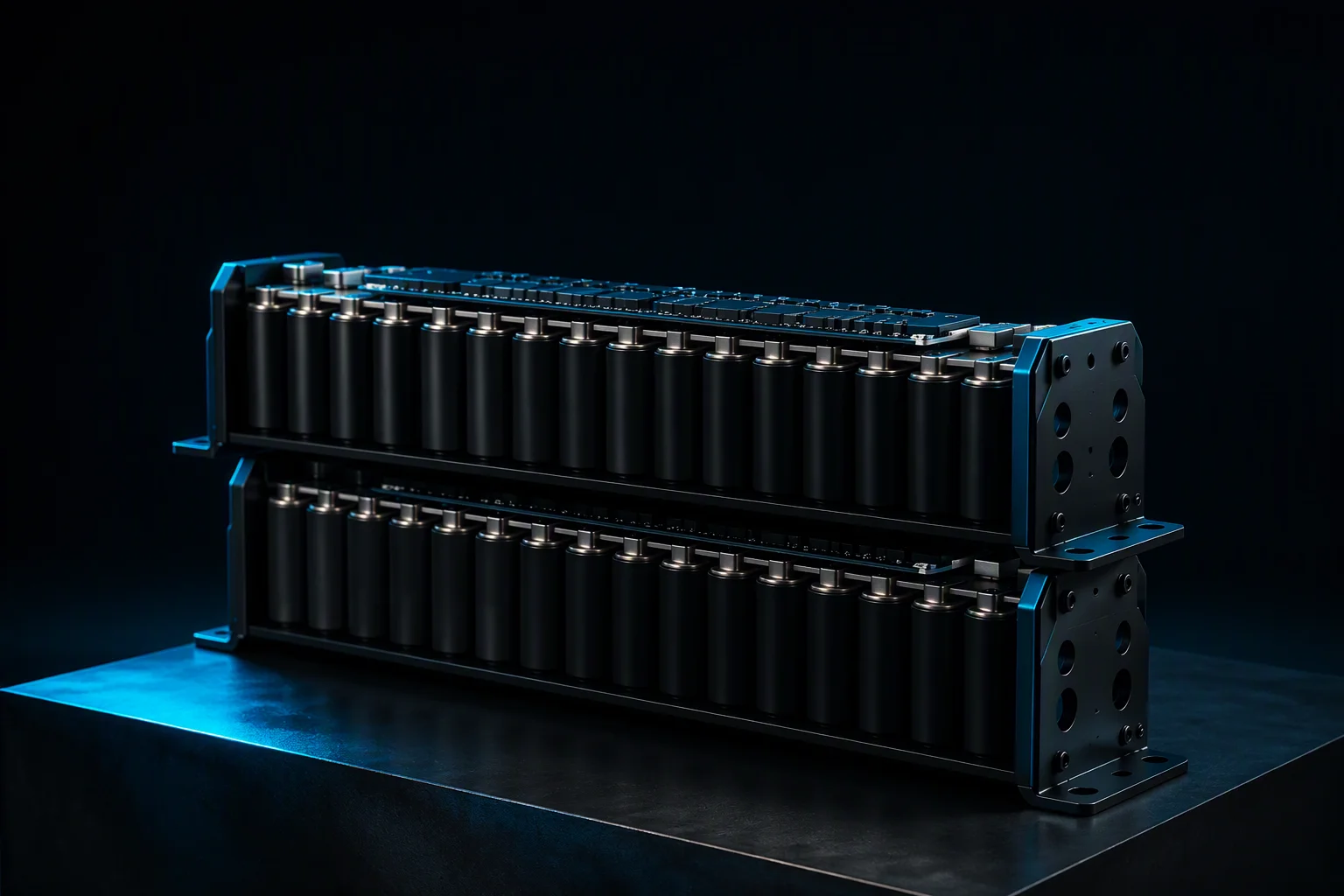
Mild-hybrid rails and fail-operational safety loads live or die on the coldest crank of the winter — AEC-Q200-class LIC modules hold the 48V redundancy rail from −40 °C upward.
Vehicle-grade pain, quantified
Where 12V and battery-only architectures crack
Automotive power design is a worst-case discipline: the system must behave identically on a summer afternoon and a −30 °C morning, through every crank, load dump and fault transition in between. Those corners are where single-battery architectures show their edges.
| Weak point | Number | Field consequence |
|---|---|---|
| 12V cold-crank failure | Starter batteries fade sharply below roughly −20 °C | No-start events and roadside failures cluster in winter fleets — a warranty and brand problem |
| Component grade | AEC-Q200 for passive-component qualification | Automotive lines audit the qualification paper trail, not just the datasheet table |
| Redundancy windows | Steering and braking ECUs must ride through cranking dips | Fail-operational targets demand millisecond-class bridging, not another battery |
| Temperature envelope | −40…+70 °C LIC operation vs a −20 °C Li-ion floor | Underhood and underbody zones both stay covered without heater overhead |
| Stop-start cycling | Hundreds of restart events per day; 500k+ LIC cycle class vs 1,000–5,000 battery cycles | The micro-hybrid duty that ages a battery in years is warm-up exercise for LIC |
| Crash-relevant energy | No thermal runaway mode in LIC chemistry | Safety-loop energy with no fire-propagation mode to contain or certify around |
The 48V architecture exists precisely because 12V alone stopped being enough — for torque assist, for active suspension, for the fail-operational budget of steering-by-wire. What it needs on the redundancy rail is a component that never becomes the weakest link.
The redundancy rail, held
One module, two protections
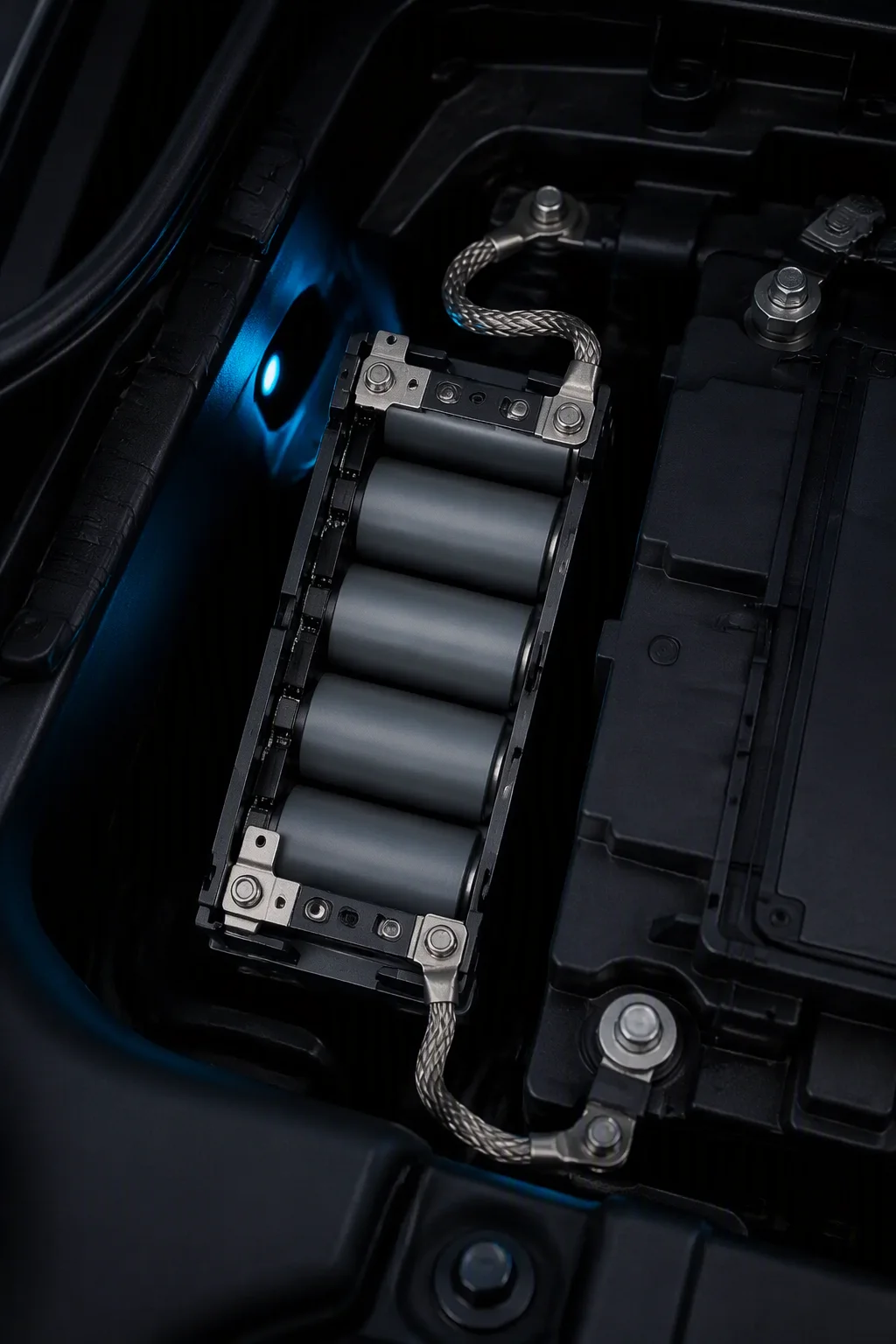
Across the 48V rail, a supercapacitor module does two jobs. In normal operation it buffers cranking transients so power steering, braking actuators and ECUs never register the dip. On a fault it supplies controlled failsafe time — enough milliseconds-to-seconds of window for the vehicle to reach its defined safe state.
CapStack builds these modules automotive-grade: components on an AEC-Q200 qualification route, −40…+65 °C operation, per-cell telemetry over CAN, and ±5% C/ESR sorting so every module in a safety loop behaves identically — the property functional-safety reviewers actually ask about.
Solution map
By load, by event
| Function | Event profile | Module contribution |
|---|---|---|
| Cold-start assist | −40 °C crank inrush | Shaves the surge the 12V battery can no longer deliver, protecting ECU brown-out limits |
| 48V redundancy rail | Milliseconds to minutes | Holds fail-operational loads through source loss until the safe-state logic completes |
| Stop-start cycling | Hundreds of events/day | 500k+ cycle class absorbs the duty across the vehicle's whole service life |
| Safety ECU ride-through | 50–500 ms fault transitions | Bridges the epoch between fault detection and fallback activation without a reset |
| Fleet consistency | Every unit, every build | ±5% C/ESR sorting plus per-cell CAN telemetry make safety-loop behavior reproducible |

Start the conversation
Spec the rail, not the brochure.
Send the redundancy load list and cold-crank profile — a module outline with its AEC-Q200 documentation path lands within 48 hours.