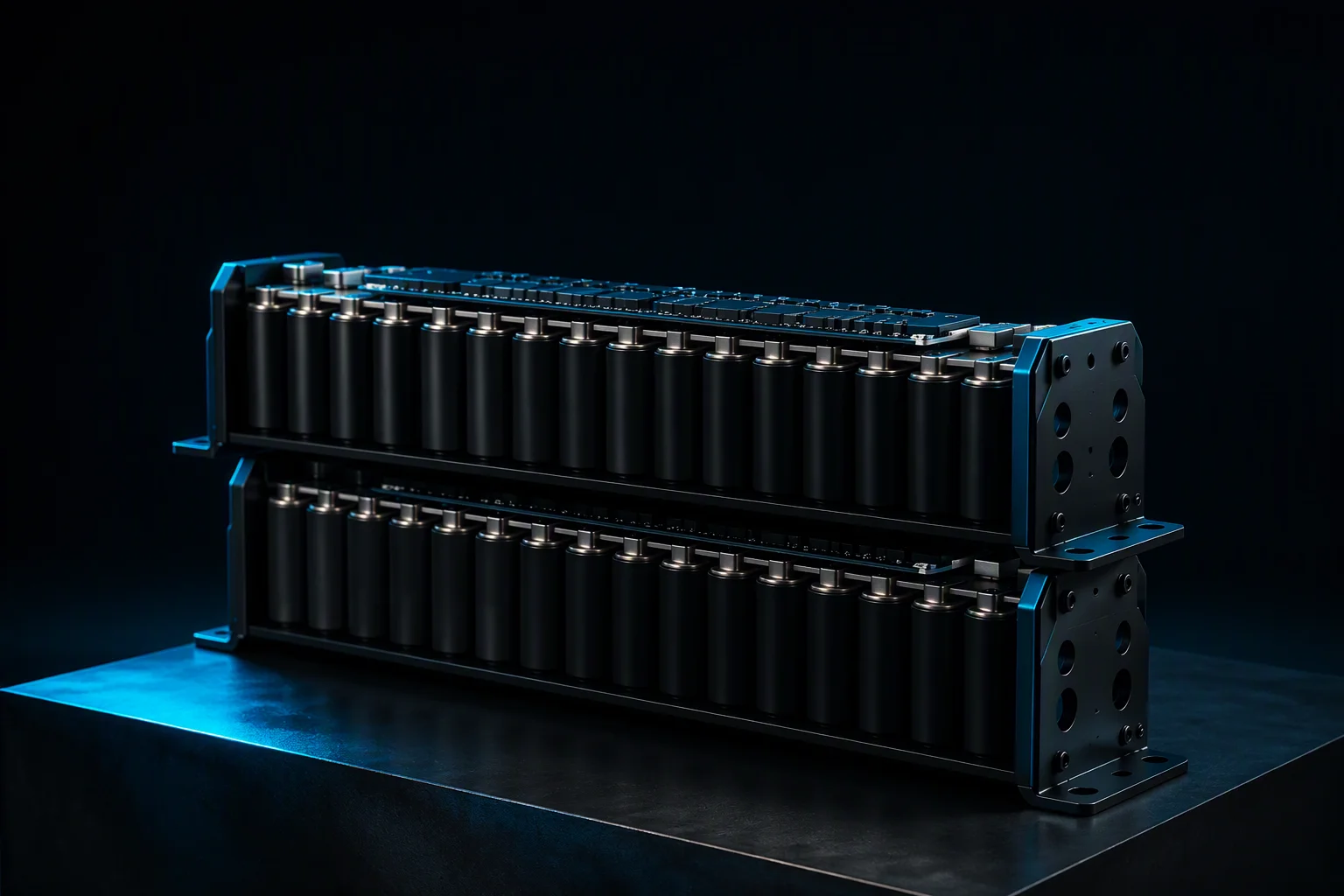
CapStack Module Factory
Where cells become rack-ready modules
One line, six stations, one cell chemistry. This is where a −10/+30% cell spread becomes a ±5% module — and where every serial number earns its test report before the carton closes.
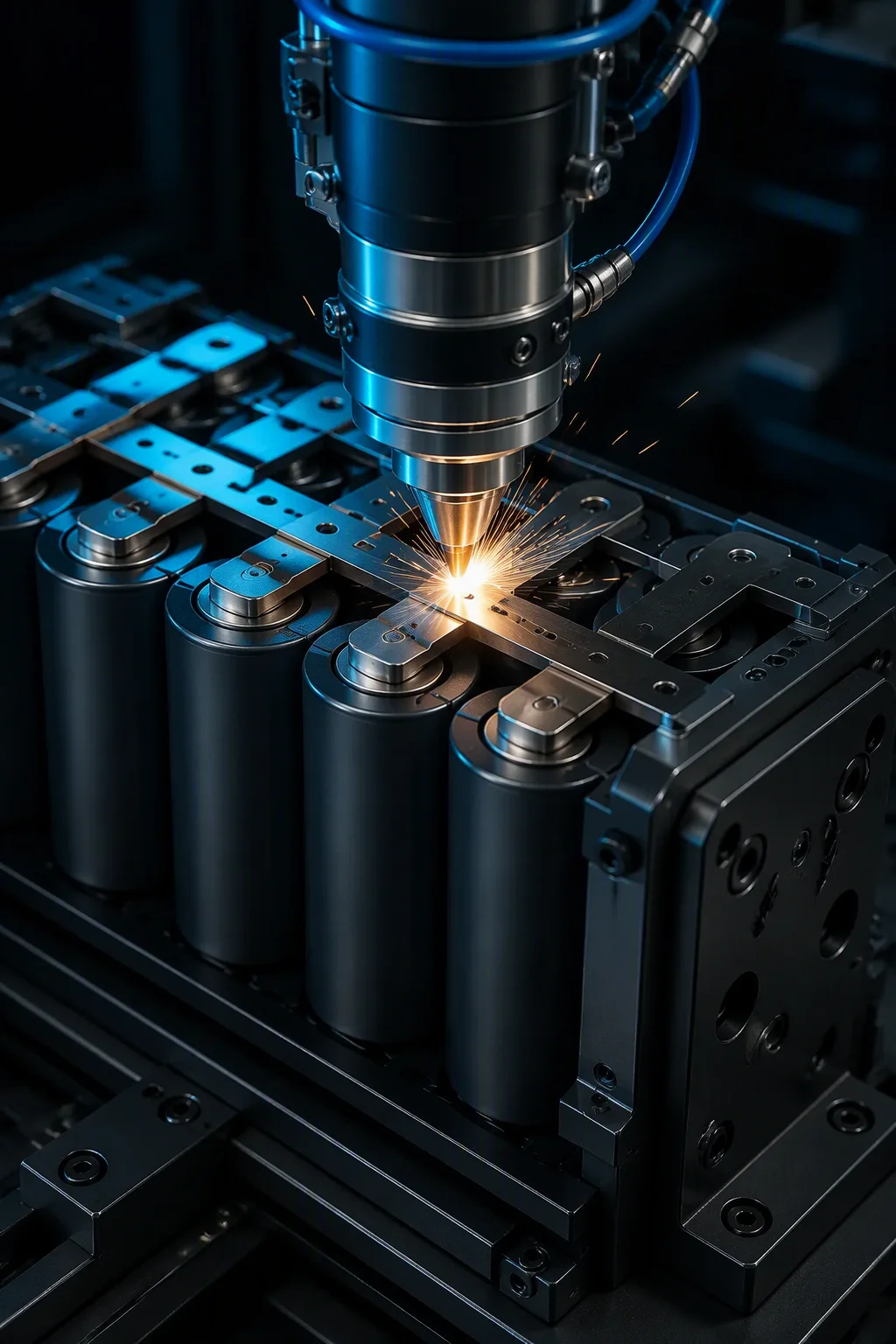
Station 03 · Laser Welding
Busbars are welded, not bolted or cabled
Cells arrive with weldable terminals or welding columns, and the line joins them to nickel and copper busbars by fiber laser. No torque to drift, no crimp to creep, no harness to age — the joint is a metallurgical bond whose resistance is logged weld by weld.
That habit is why module numbers hold: large-format cells carry an ESR floor down to a 0.47 mΩ DC class, so every milliohm added by a bad joint is a measurable percentage of the whole string. Keeping joint resistance flat is what lets a 16S module publish a surge current class above 500 A and keep it through the fleet, not just on the sample.
Weld parameters are fixed per cell type, verified at setup, and archived with the serial number — the same record set your quality team audits against when the pilot fleet returns data.
The line, end to end
Six stations between cell and carton
Incoming IQC
Every cell lot is sampled against its datasheet — capacitance, ESR, leakage, visual and dimensional checks — before a lot is released to the floor.
Capacity sorting & binning
C/ESR dual-parameter measurement bins cells into matched sets; the −10/+30% incoming spread converges toward a ±5% module window.
Laser welding
Terminals and welding columns join to busbars under fixed parameters; joint resistance is recorded per weld, per serial.
BMS assembly
Balancing and telemetry go in: per-cell voltage plus NTC sensing, three-level alarms with error output, sleep draw under 20 µA.
Aging & screening
Modules rest under controlled load and temperature while parameters settle; anything drifting outside its bin window is pulled, not pardoned.
Final test & packing
100% of modules pass a final electrical check; the test report, UN 3499 Class 9 documents and traceability records ship in the box.
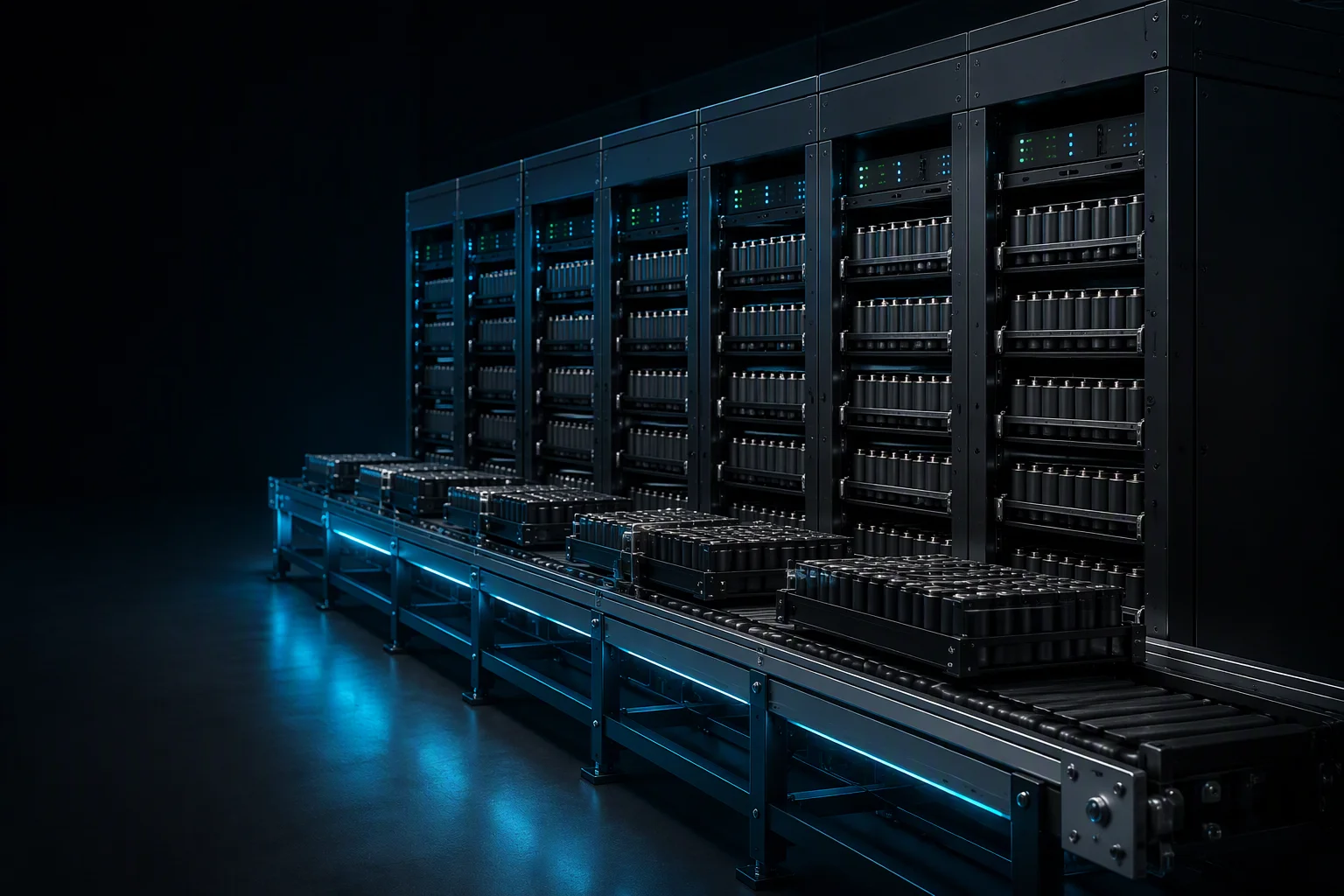
Station 02 · Capacity Sorting
±5% is manufactured here, not promised
Sorting cabinets measure every cell twice over — capacitance and ESR together, because a module built on capacitance alone will still run hot when resistance pairs badly. Cells land in bins held to a ±5% window before a single busbar is cut.
The arithmetic behind it: cell makers ship a −10/+30% incoming spread, and a series string amplifies the mismatch — the weakest cell sets the module. Binning collapses that spread into matched sets, so a 16S module behaves like one 48.6 V component instead of sixteen strangers.
Every measurement is logged against the cell ID, the bin and finally the module serial — 100% traceability, and the raw data rides along in the shipment's test report.
Line capability
The numbers this floor is accountable for

Audit the line
The line answers questions a datasheet can't.
Send your rack profile and ask for the process sheet behind it — weld parameters, bin logic and aging criteria come back with the quote, alongside the ±5% evidence.