Industry · Railway
Every brake stop is free energy
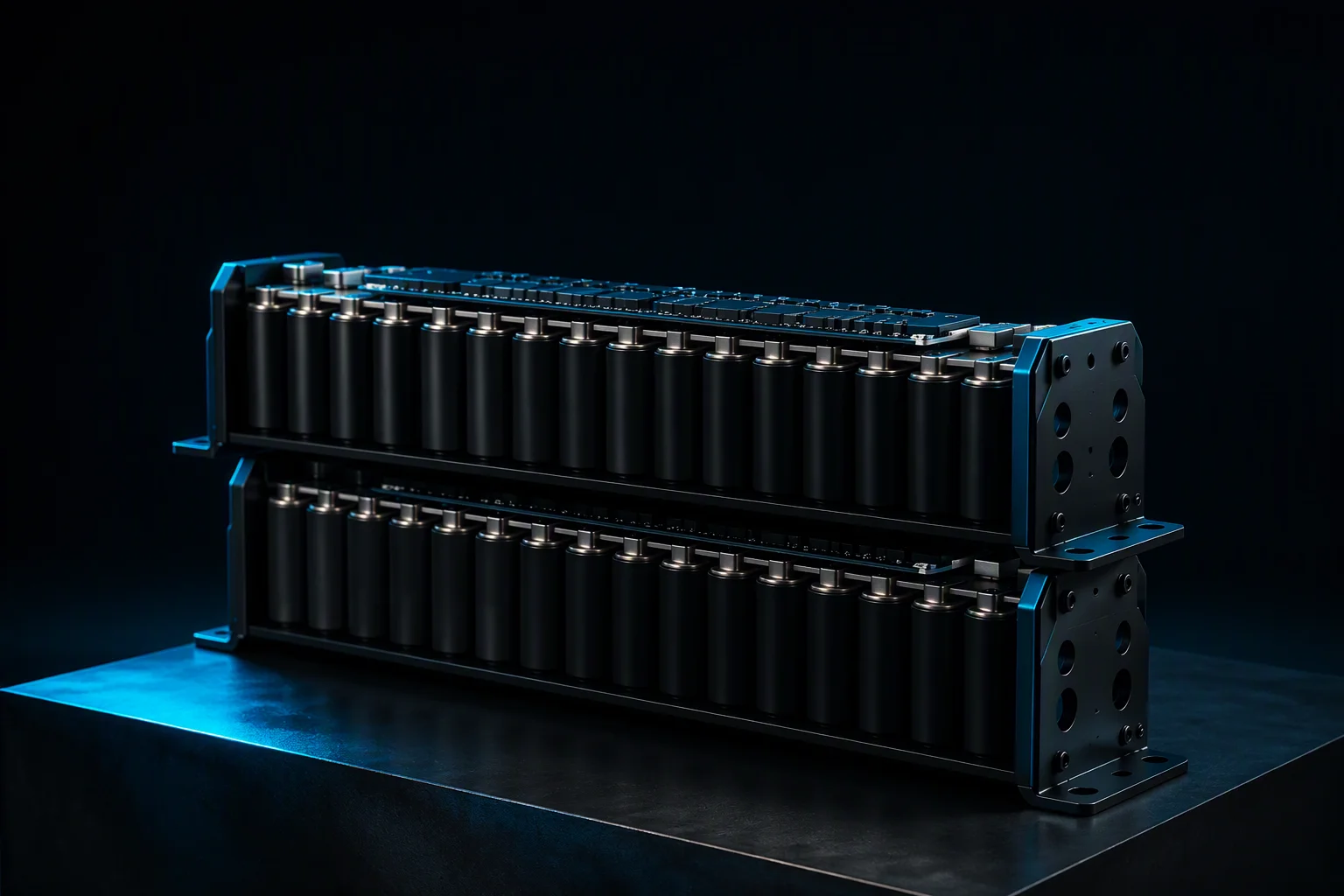
A metro vehicle brakes hundreds of times a day, dumping kinetic energy as heat in the friction pads — LIC storage catches each event in milliseconds and hands it back on the next acceleration.
Traction-duty pain, quantified
The duty cycle that eats batteries alive
Rail braking is the most punishing cycling profile in land transport: deep pulses, short rest, and a service life measured in decades. The arithmetic below explains why traction engineers stopped specifying chemical batteries for recovery duty.
| Duty factor | Number | What it rules out |
|---|---|---|
| Brake events | Hundreds per vehicle per day | Any storage sized on a few daily cycles burns its calendar life in months |
| Braking power | Instantaneous spikes from kW up to MW class across a train | Slow-responding storage misses the pulse entirely; the energy lands in the pads as heat |
| Battery cycle math | 1,000–5,000 cycles for Li-ion | Full-recovery duty would consume a year's cycle budget in a week of service |
| Capacitor life | Million-cycle class for EDLC and LIC | Matches vehicle overhaul cadence — storage becomes infrastructure, not a consumable |
| Catenary receptivity | Regenerated power only counts if a load takes it | Trackside storage catches what the timetable cannot absorb, stabilizing DC bus voltage |
| Onboard mass budget | 13.7–62 Wh/kg across LIC formats | Energy per kilogram matters twice on a vehicle: once in traction, once in payload |
Response time closes the argument: LIC modules accept charge within 1–50 ms of the regeneration spike, then release it on the next launch — a rhythm repeated hundreds of times a day without measurable aging from the cycling itself.
Two places to put the bank
Recover at the axle, buffer at the substation
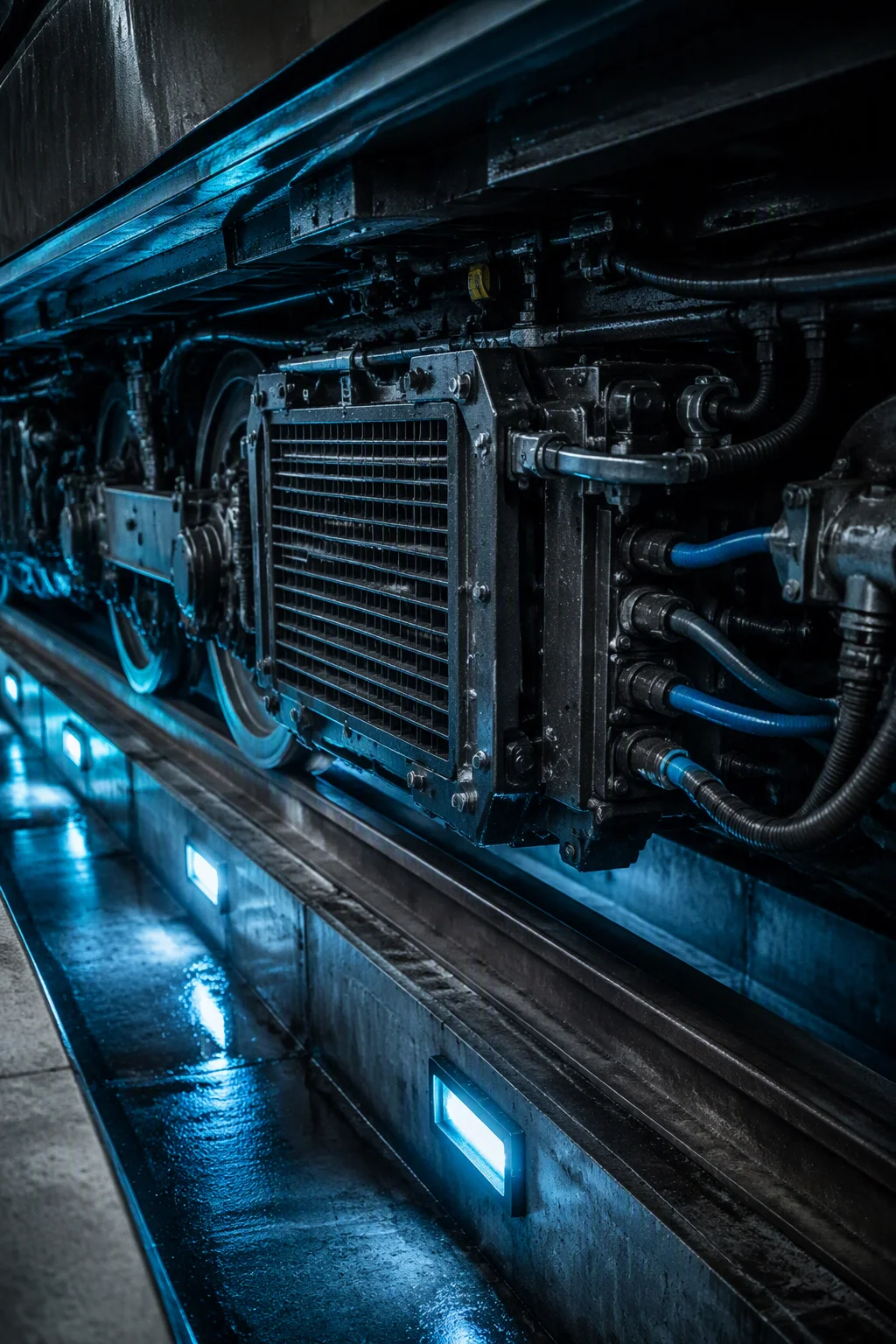
Onboard, a supercapacitor bank across the traction DC link absorbs braking spikes at 1–50 ms response and feeds them back on acceleration, cutting peak current draw from the catenary and reducing pantograph wear. Trackside, storage stations catch what adjacent trains cannot use, holding line voltage steady across the headway.
Both installations are the same physics at different scale: 3.8/4.0 V LIC cells stringed to the traction bus, active balancing for shallow-but-relentless cycling, and per-cell telemetry so maintenance plans run on data instead of mileage.
Solution map
From underfloor to substation yard
| Installation | Duty window | Sizing note |
|---|---|---|
| Onboard braking recovery | 1–50 ms, hundreds of cycles/day | Bank sized to per-stop recoverable energy; underfloor or roof formats |
| Trackside wayside storage | Seconds per headway | Absorbs receptivity shortfall and shaves substation demand peaks |
| Station DC backup | Minutes | Bridges signaling and auxiliary loads through supply dips without genset start |
| Cold-depot starting | −40 °C mornings | Roll-out without pre-heating the storage bank — LIC cranks where Li-ion will not |
| Life-cycle accounting | Overhaul intervals | Million-cycle-class storage turns recovery into a capital asset, not a spares line |

Start the conversation
Send a day-in-the-life duty cycle.
Brake events per shift, headway and catenary voltage in — a storage sketch with cycle-life arithmetic comes back within 48 hours.