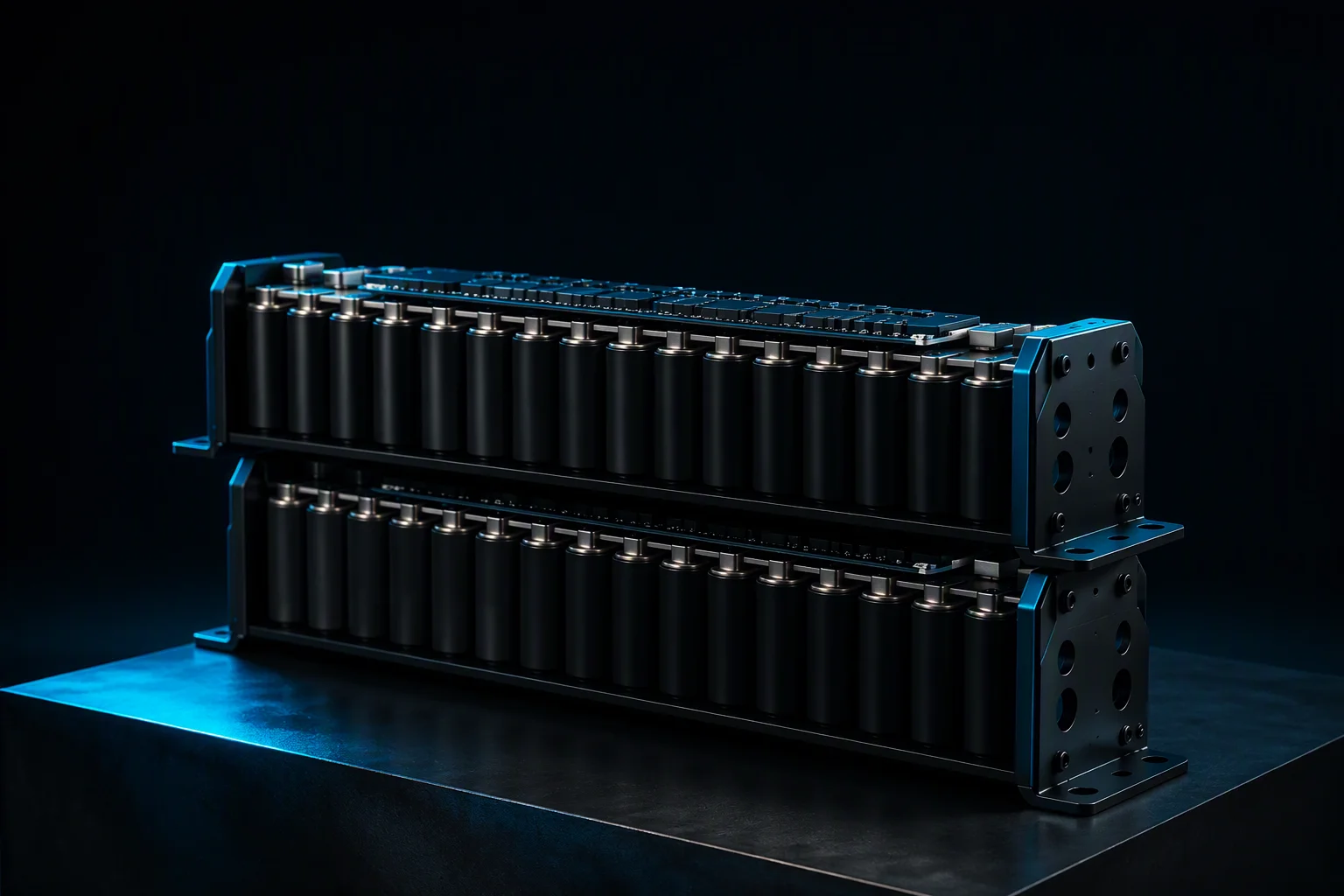
PSU · 16V ON-BOARD
PSU pack — energy storage inside the power shelf
This 16 V-class LIC hybrid supercapacitor pack puts ride-through energy where GB300-class architecture already puts it: inside the power supply, which now carries 65 J of storage per GPU, with capacitors filling roughly half of PSU internal volume. We build the pack — 4S, weld-assembled, sorted to ±5%.
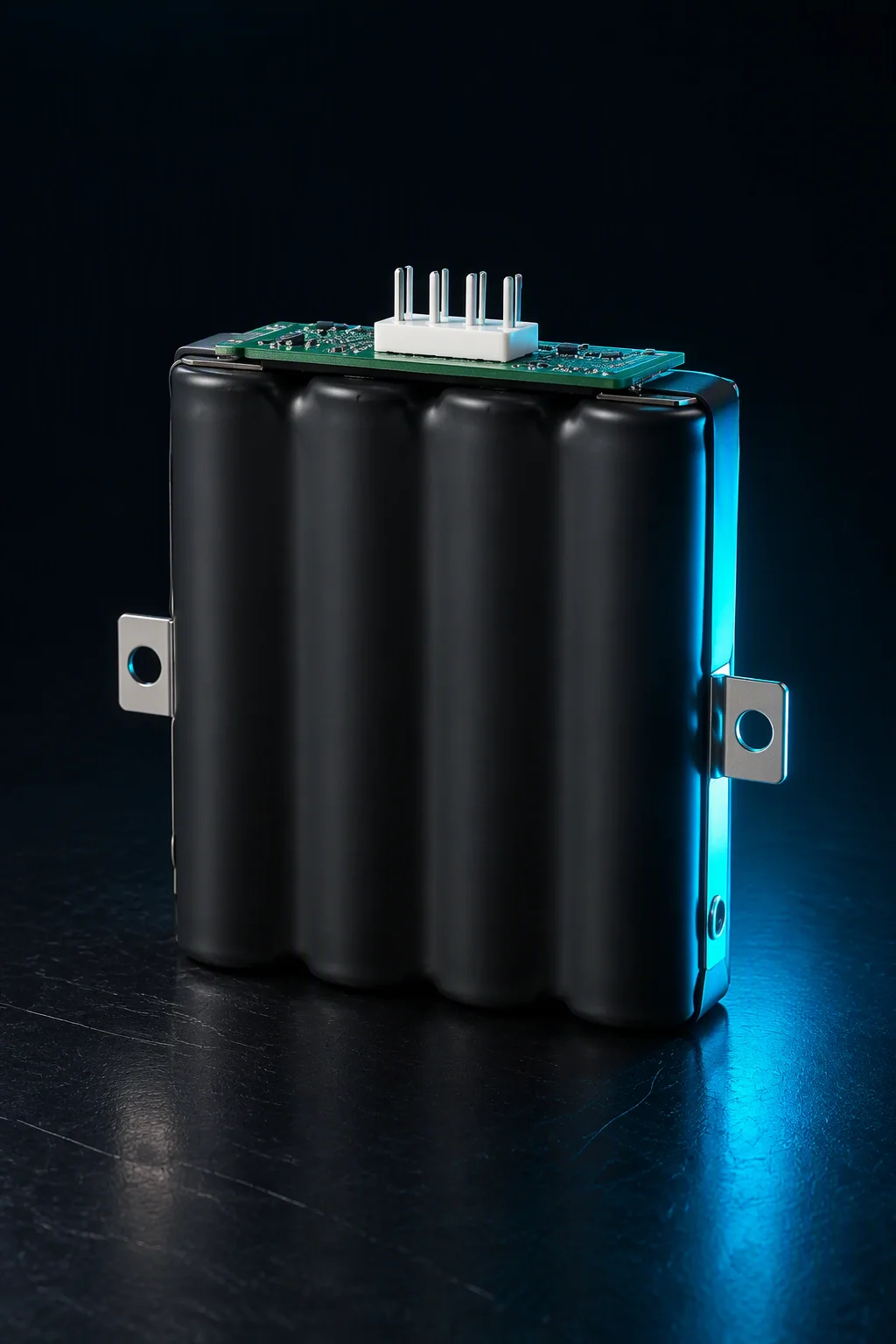
At a glance
The pack in four numbers
Four 3.8 V hybrid cells in series with a 2.5 V-per-cell usable floor.
Capacitance sized to your PSU hold-up budget, not to a catalog part.
The densest real estate in the supply — the pack is shaped to win it back.
−40 … +65 °C operating range, no preheat, no derate cliff at cold start.
Datasheet
PSU / 16V pack specification
The pack is application-sized: capacitance and footprint are fixed once your hold-up window and board envelope are known. The lines below are the standard build.
| Parameter | Value |
|---|---|
| Rated voltage | 16 V class (4S × 3.8 V LIC cells) |
| Cell format | 3.8 V hybrid cells, weldable terminals, 3000–16000 F class |
| Capacitance | Sized per PSU hold-up budget; C/ESR sorted to ±5% |
| Energy tier | Targets the 65 J/GPU storage built into GB300-class PSUs |
| Surge current class | Cell-level 450 A; pack surge per configuration |
| Response tier | 1–50 ms transient absorption |
| Balancing | Passive standard, active optional; module-to-module auto |
| Monitoring | Per-cell voltage taps + NTC option, three-level alarms |
| Mounting | PCB-mount or busbar-welded variants, low-profile on request |
| Operating temperature | −40 … +65 °C |
| Cycle life class | 500,000+ cycles in a 3.5 → 2.5 V window |
| Shipping documents | UN 3499 Class 9 · IATA A186 / PI 971 |
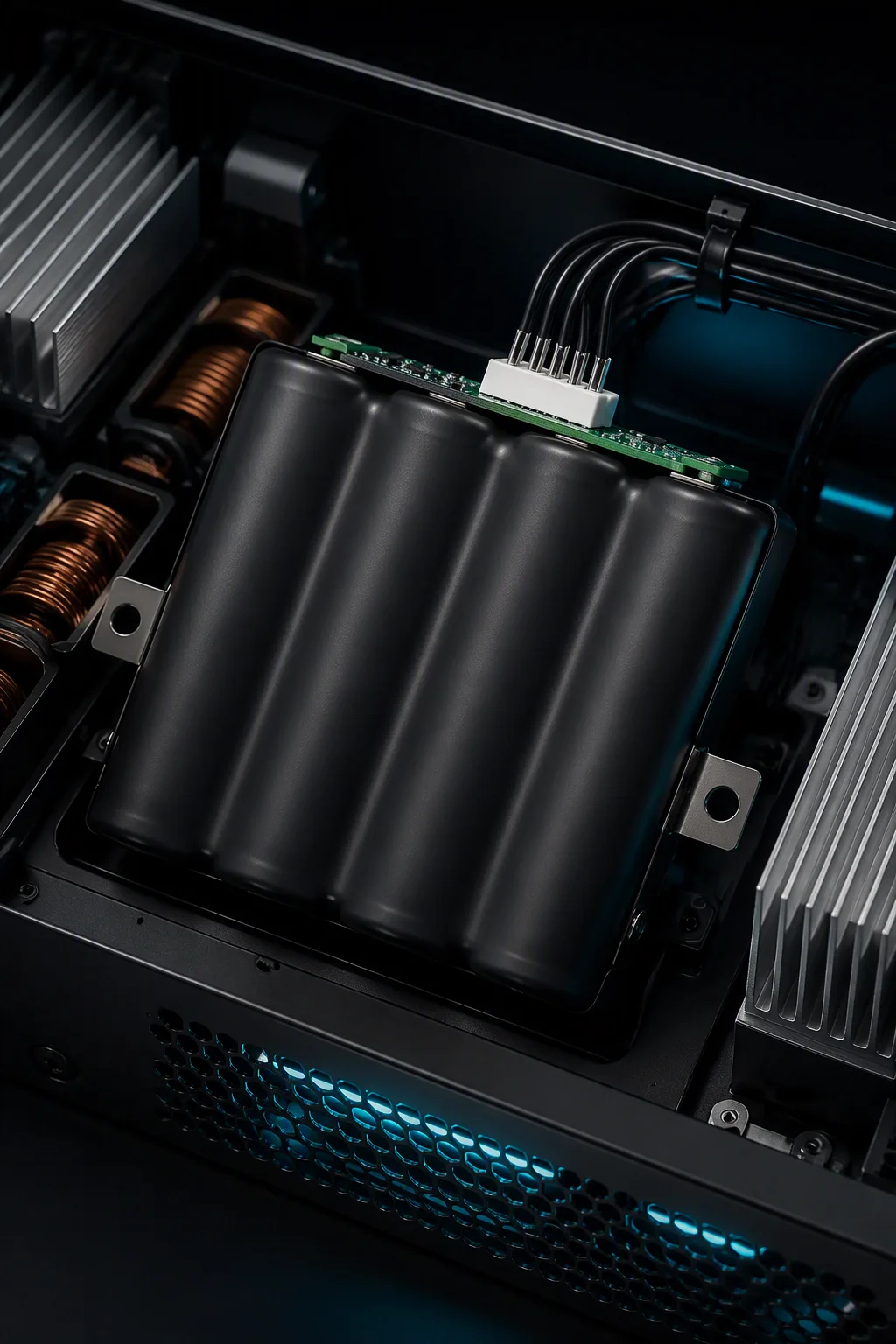
Why the PSU carries storage
The grid is minutes late to a millisecond problem
A training rack swings toward 132–142 kW in the time it takes a fan to spin up, while generation needs 1–90 minutes to ramp. The industry's answer moves storage into the supply itself: PSUs running at 94.5% efficiency now reserve energy on-board, and rack-integrated storage cuts peak grid draw by up to 30%.
A supercapacitor pack is what makes that reserve fast and durable. It releases in 1–50 ms, survives hundreds of thousands of shallow cycles, and tolerates the 50-plus-degree ambient swing a 1U shelf sees. Batteries are too slow for the first spike and too fragile for the cycling; EDLC is too bulky for the volume. The stakes are checkpoint math: one published 54-day Llama-class training run logged 419 unintended interruptions, 58.7% of them GPU-side — the millisecond tier exists to keep your run off that list.

Start the conversation
Building a supply or a shelf? Let's size the pack.
Send hold-up time, bus voltage and board envelope — within 48 hours you get a capacitance class, a mounting proposal and a sample plan.