Industry · Wind Pitch
Feather the blades when the grid quits
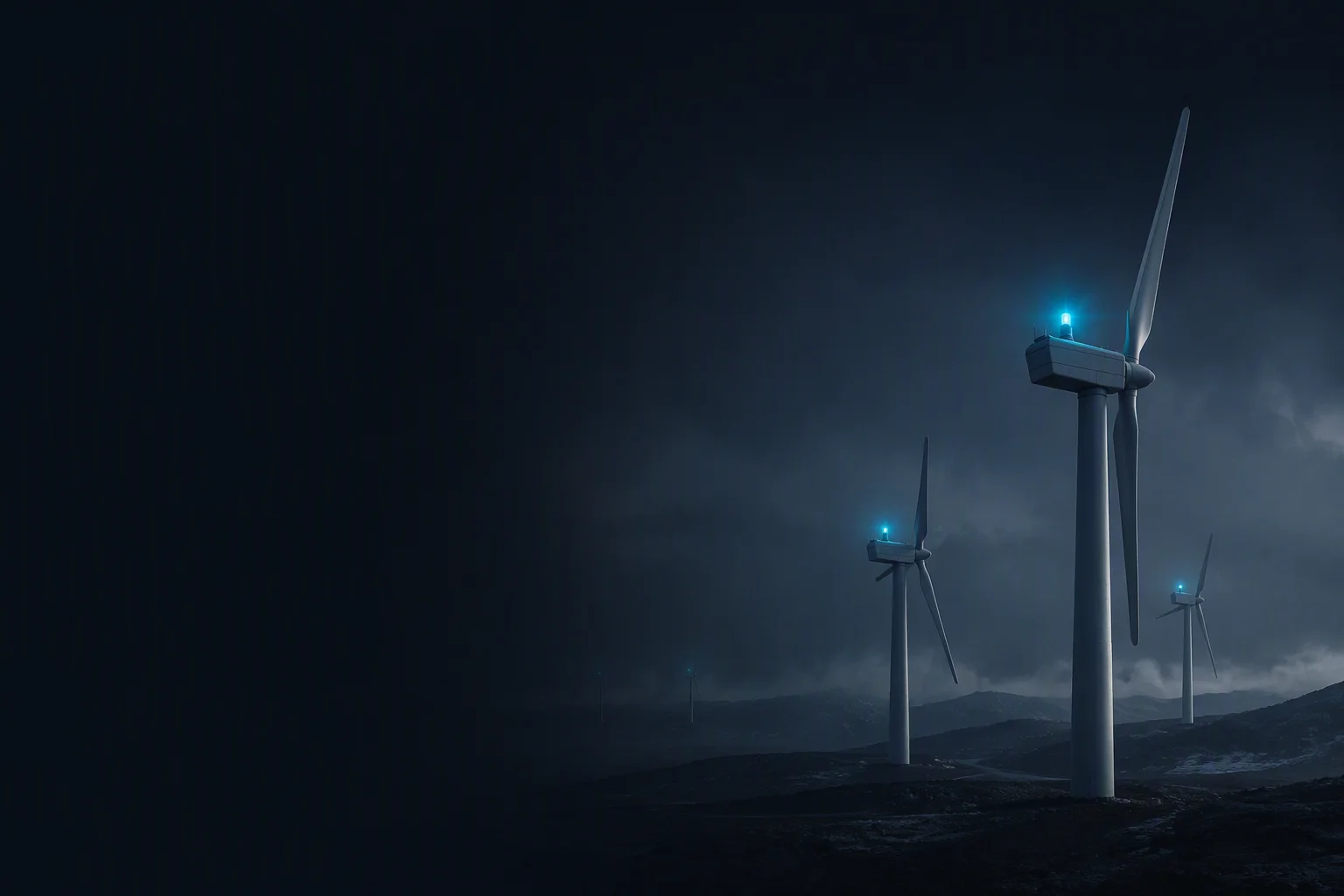
Aerodynamic braking is the turbine's last line of defense, so the pitch system must move three blades to feather with zero grid power — at any temperature the site can produce.
Hub-height pain, quantified
Why pitch backup fails exactly when needed
Pitch backup is a safety function first and an energy store second. The failure modes below are not efficiency problems — they are certification and availability problems that show up in the worst weather of the year.
| Failure mode | Number | Why it matters |
|---|---|---|
| Grid-loss feathering | Full feather demands motor torque with zero external power | Certification treats emergency feathering as mandatory; a stalled blade is a structural event |
| Cold battery collapse | Lead-acid and Li-ion fade hard below −20 °C | Wide-temp LIC cells keep delivering at −40 °C (−40…+70 °C series range) |
| Cycle economics | Li-ion 1,000–5,000 cycles vs 500k+ LIC class at a 3.5→2.5 V window | Pitch corrections accumulate over a 20-plus-year tower life; batteries spend their budget early |
| Access windows | A nacelle swap costs crane mobilization days | A 15-year design-life class module beats mid-life battery replacement campaigns on remote sites |
| Charge retention | ≥3.7 V held per LIC cell after 72 h rest | Backup must be ready after weeks of idle — self-discharge is the silent killer |
| Fire load in the hub | Li-ion carries thermal runaway risk; LIC chemistry does not | No runaway mode in a housing that rescue crews may not reach for hours |
Cold sites make the case bluntly: an operator that specs lead-acid backup at −25 °C ambient is scheduling the first replacement before the warranty on the rest of the drivetrain expires. LIC storage turns that line item into a set-and-forget component.
The fix in the hub
Backup that starts at −40 °C, on demand
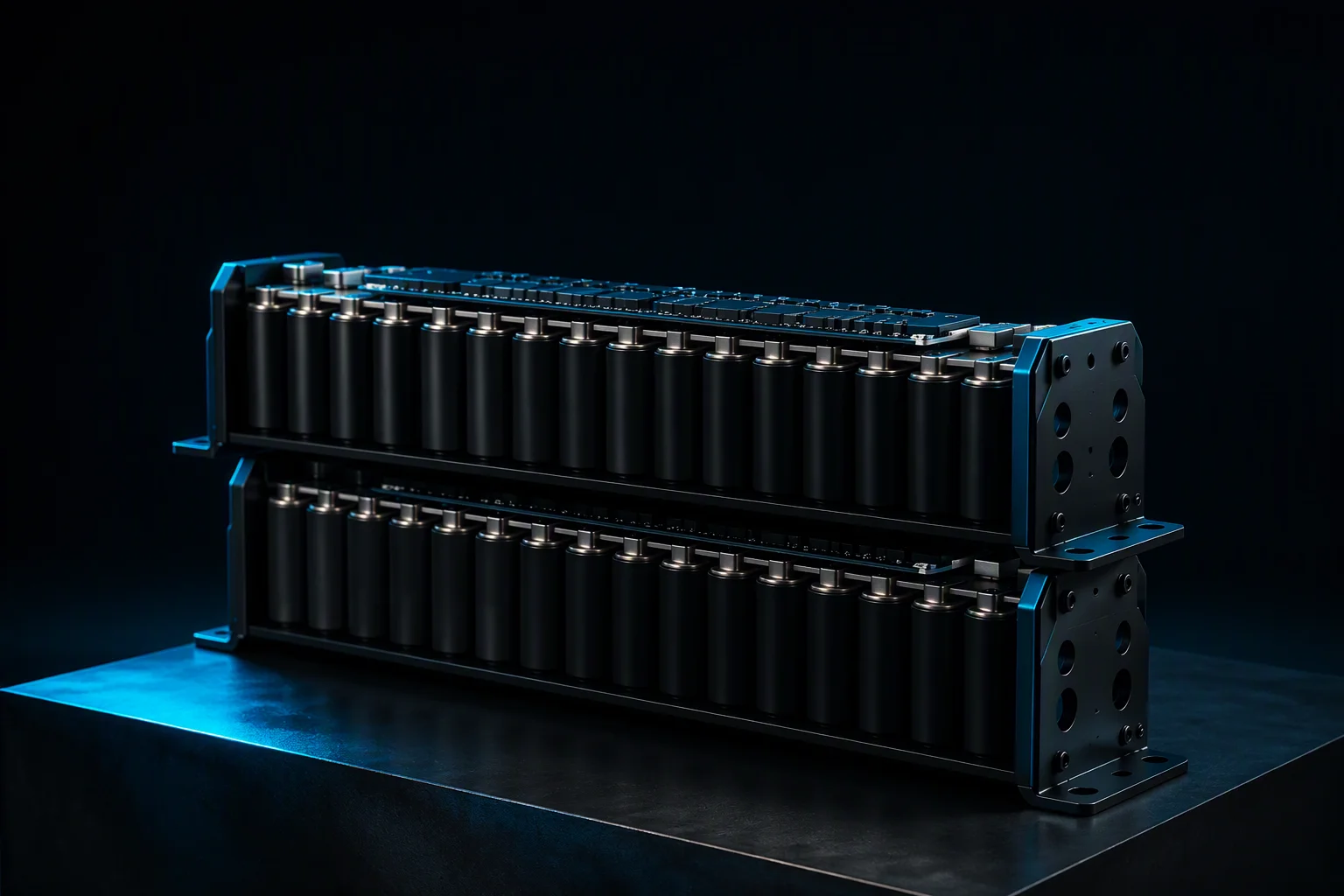
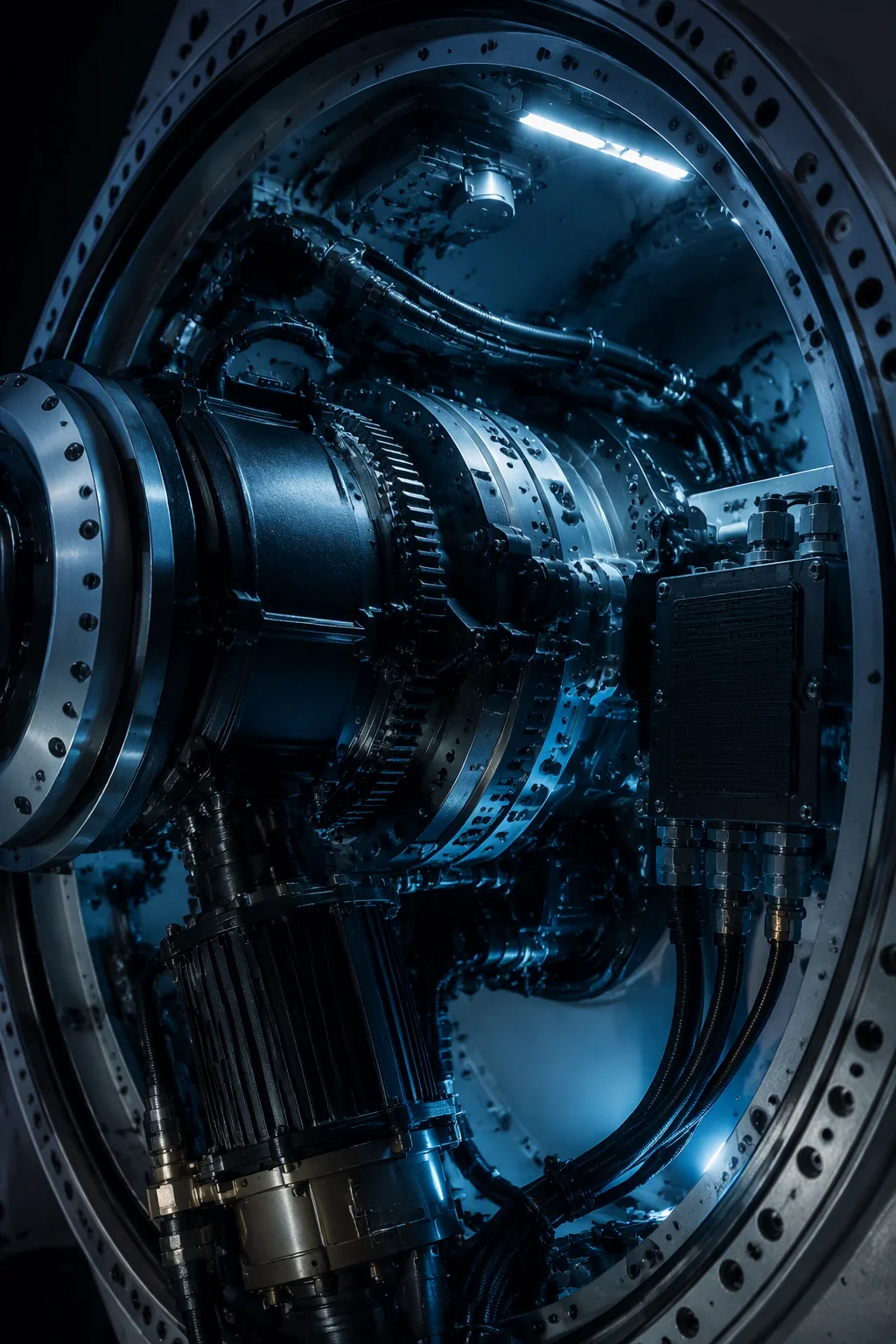
A pitch-backup module has one job: deliver motor current after weeks of standby, in an ambient where electrochemistry is asleep. LIC hybrid supercapacitors hold charge (≥3.7 V after 72 h rest) and discharge at −40 °C, with no thermal-runaway mode anywhere in the chemistry — a meaningful difference 90 meters up.
CapStack pitch modules pair 12–24 V or custom stacks with <20 µA dormancy draw, active balancing sized against heater and motor loads, and three-level alarm logic wired straight into the turbine controller — so the farm's SCADA sees backup health, not just backup presence.
Solution map
Spec'd for the event, not the average
| Requirement | Duty point | CapStack fit |
|---|---|---|
| Pitch motor backup | Seconds of torque per event | Surge class above 500 A (<5 s) moves the blade through feather without grid support |
| Cold-site retrofit | −40…+65 °C ambient | Drops into lead-acid footprints whose chemistry gives up below −20 °C |
| Tower-life budget | 20+ year service target | 500k+ cycle class and a 15-year design-life class match overhaul cadence, not consumables |
| Standby integrity | Weeks between events | <20 µA sleep draw plus ≥3.7 V retention after 72 h rest |
| Controller integration | SCADA / farm controller | CAN telemetry with over-charge, over-discharge and over-temp alarms plus a hard error line |

Start the conversation
Tell us the site's coldest design temperature.
Within 48 hours we return a pitch-backup module outline, a −40 °C discharge curve and a retrofit BOM keyed to your hub footprint.