Module engineering
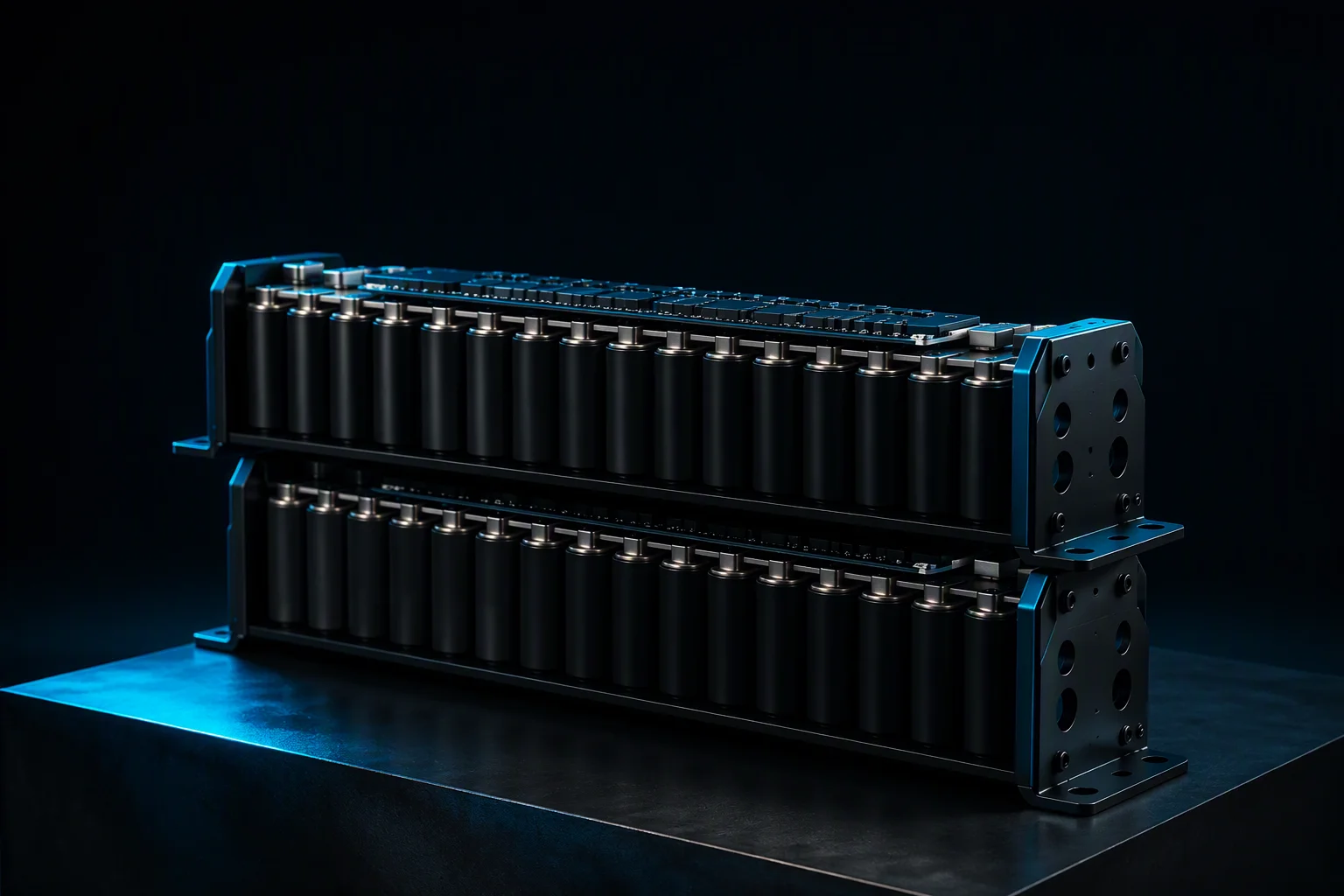
A module is a system, not a stack of cells
Put sixteen LIC cells in series for a 48.6 V supercapacitor module and every cell-level difference gets amplified: the highest-capacitance cell sets the charge ceiling, the highest-ESR cell sets the heat map, and the one with the worst self-discharge quietly drags the whole string toward imbalance. Cell datasheets ship tolerances as wide as −10/+30%; a finished module only earns its rating when engineering closes that gap.
CapStack's line closes it in six steps — laser-welded busbars, application-matched balancing, per-cell telemetry, and a dielectric proof at AC 2,000 V before anything is boxed.
Joint one
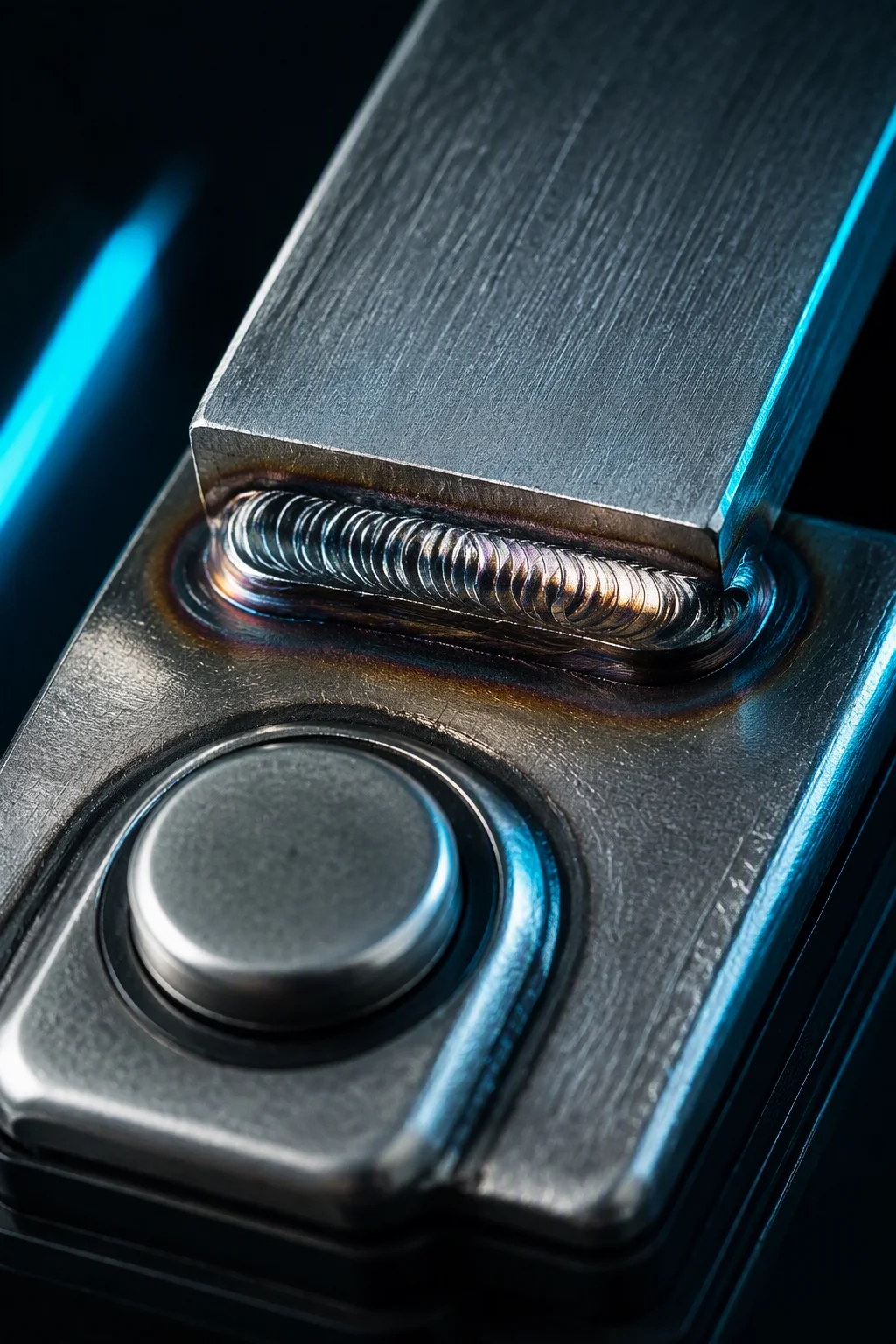
Laser-welded busbars, not cabling
A series string lives or dies at its joints. CapStack welds busbars directly to cells that are built for it — weldable-terminal cylindrical cells and welded-column large prismatic cells — so the current path contains no crimped lug, no threaded joint working loose under 500 A-class surge pulses, and no hand-solder iron soaking heat into a cell terminal.
Welding also makes joint resistance repeatable from unit to unit. That repeatability is what lets a ±5% capacity-sorted set stay a matched set after assembly — and why the module's DC path stays predictable at 1–50 ms response speed, where every milliohm is a voltage step the rack feels.
The line
Six steps from bare cells to boxed module
Laser welding
Busbars joined to weldable terminals and welded-column cells; every joint inspected before the next layer goes on.
Balancing configuration
Resistive, active or passive balancing selected per application — balancing runs inside each module and across modules in a string.
BMS integration
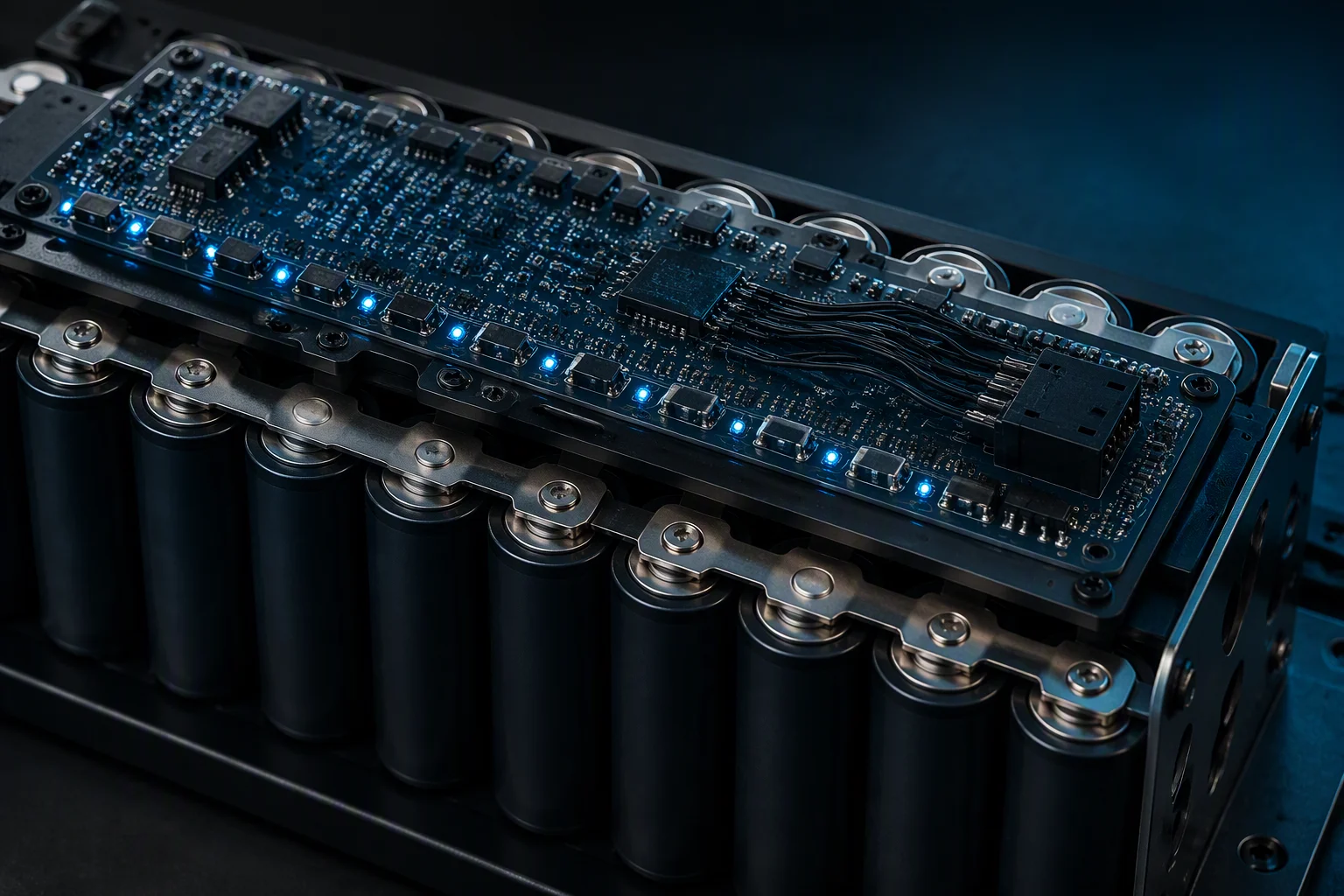
Per-cell voltage taps and NTC temperature sensing wired and read back; CAN 2.0B and FUSE-protected busbars on high-voltage versions.
Dielectric test
AC 2,000 V for 1 minute of insulation withstand on the assembled module — no exceptions, every unit.
Aging & dormancy check
Modules rested and re-measured; sleep-state draw verified below 20 µA so backup shelves stay quiet for years.
Final test & report
100% functional test at end of line, and a per-module test report goes into every box.
Engineering parameters
The three settings that define the module
Balancing
Auto, inside and across modules
Resistive-discharge balancing as standard; active or passive selectable on custom builds. Balancing runs within each module and module-to-module along the string, without an external power supply.
DORMANCY <20 µA
Monitoring & alarms
Per-cell eyes, three-level alarms
Every cell's voltage plus module-center NTC temperature is monitored; high-voltage versions report over CAN 2.0B. Three alarm classes — over-charge, over-discharge, over-temperature — plus a dedicated error-signal output.
CAN 2.0B · PER-CELL V + NTC
Insulation & environment
Margins you can audit
Dielectric withstand verified at AC 2,000 V for 1 minute on every finished module. Storage rated −40…+80 °C with 0…+35 °C recommended — the discipline behind the 15-year design-life class in backup service.
AC 2000 V / 1 MIN
Heat has a vote
Thermal design: 3 mm that decide a decade
Temperature gradient is a life-thief. The hottest cell in a string ages fastest, its ESR climbs, and the imbalance the factory sorted away comes back — end of life for a supercapacitor is defined by rising ESR and falling capacitance, and heat accelerates both. Forced-air module versions therefore keep a 3 mm air duct between every cell, so cooling air passes each one instead of shortcutting around the stack.
The payoff is rated in numbers: a 48 V-class module holds 130 A continuous at 25 °C in natural air, and forced-air high-voltage versions keep their full −40…+65 °C operating window with those ducts doing the quiet work.

Engineering desk
Bring us the string, not just the cell count.
Voltage window, balancing preference, connector plan — a 30-minute exchange with our engineers settles what no datasheet will. Numbers-first replies land inside 48 hours.