Three chemistries, one seat to fill
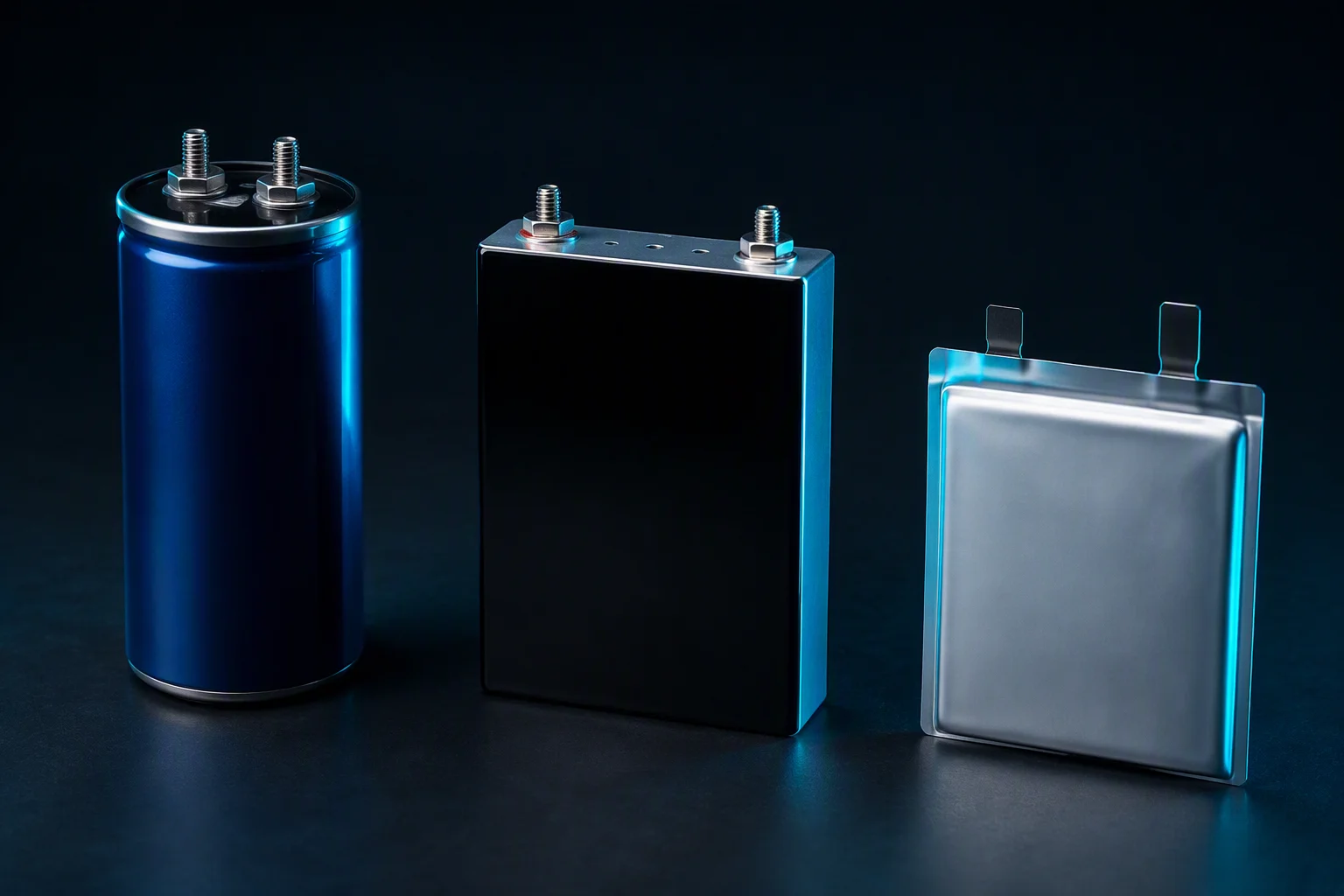
The ride-through seat in a backup architecture has three credible candidates: electric double-layer capacitors (EDLC), lithium-ion capacitors (LIC) and lithium-ion batteries. Each is optimized for a different failure mode, and each fails differently in someone else's seat. The seat itself is defined by four questions: how fast must it respond, how long must it hold, how many times will it do that, and how cold can it get.
Datasheets rarely answer those questions in one place, so here is the comparison in one table — all figures are cell-level datasheet-class values, not marketing claims.
The table that decides it
| Parameter | LIC | EDLC | Li-ion battery |
|---|---|---|---|
| Cell voltage | 3.8 / 4.0 V | 2.7–3.0 V | 3.2–3.7 V |
| Energy density | 13.7–62 Wh/kg | 3–8.5 Wh/kg | ~130–265 Wh/kg |
| Power density | up to 22 kW/kg class | 22–28 kW/kg | 0.5–3 kW/kg |
| Cycle life | 500k+ @ 3.5→2.5 V; ~50k @ 4.0→2.5 V | 500k–1M | 1,000–5,000 |
| Operating temperature | −40 … +70 °C (series-dependent) | −40 … +85 °C | −20 … +60 °C |
| Response time | 1–50 ms | ms class | Electrochemical delay |
| Thermal runaway | None — adsorption + pre-lithiated carbon | None (lithium-free) | Managed by BMS + thermal design |
| Self-discharge, 72 h | Holds ≥3.7 V after 72 h | Higher | Lower |
| Energy vs same-size EDLC | 10× | Baseline | Highest overall |
| Best seat | Millisecond ride-through tier | Shortest bursts, harshest cycle duty | Minutes-to-hours backup |
Why the millisecond tier belongs to LIC
EDLC responds just as fast but stores ten times less energy in the same volume, so an EDLC-only ride-through either grows the shelf or shrinks the window. Li-ion stores far more but reacts with electrochemical delay and counts its life in thousands of cycles — the wrong arithmetic for a device that fires on every load step. LIC sits deliberately between: a 3.8/4.0 V cell means roughly 30% fewer cells in series for the same bus voltage, half a million cycles on a 3.5 V window, and no thermal runaway because charge is stored physically — adsorption at the carbon electrode plus a pre-lithiated negative — rather than by a reaction that can run away.
The full chemistry-by-chemistry breakdown, including the mechanism diagrams, lives on our LIC vs EDLC vs Li-ion technology page.
Where each one still wins
Honesty keeps designs alive: EDLC remains the right answer for million-cycle-class duty where energy density barely matters — railway braking recovery fires hundreds of times a day, and an EDLC handles it without complaint. Li-ion remains unbeaten for minutes-to-hours backup, which is why AI racks run LIC for transients and a lithium BBU behind it for sustained bridging. The point is not that one chemistry wins; it is that the tier boundaries are sharp, and crossing them is what makes systems fragile.
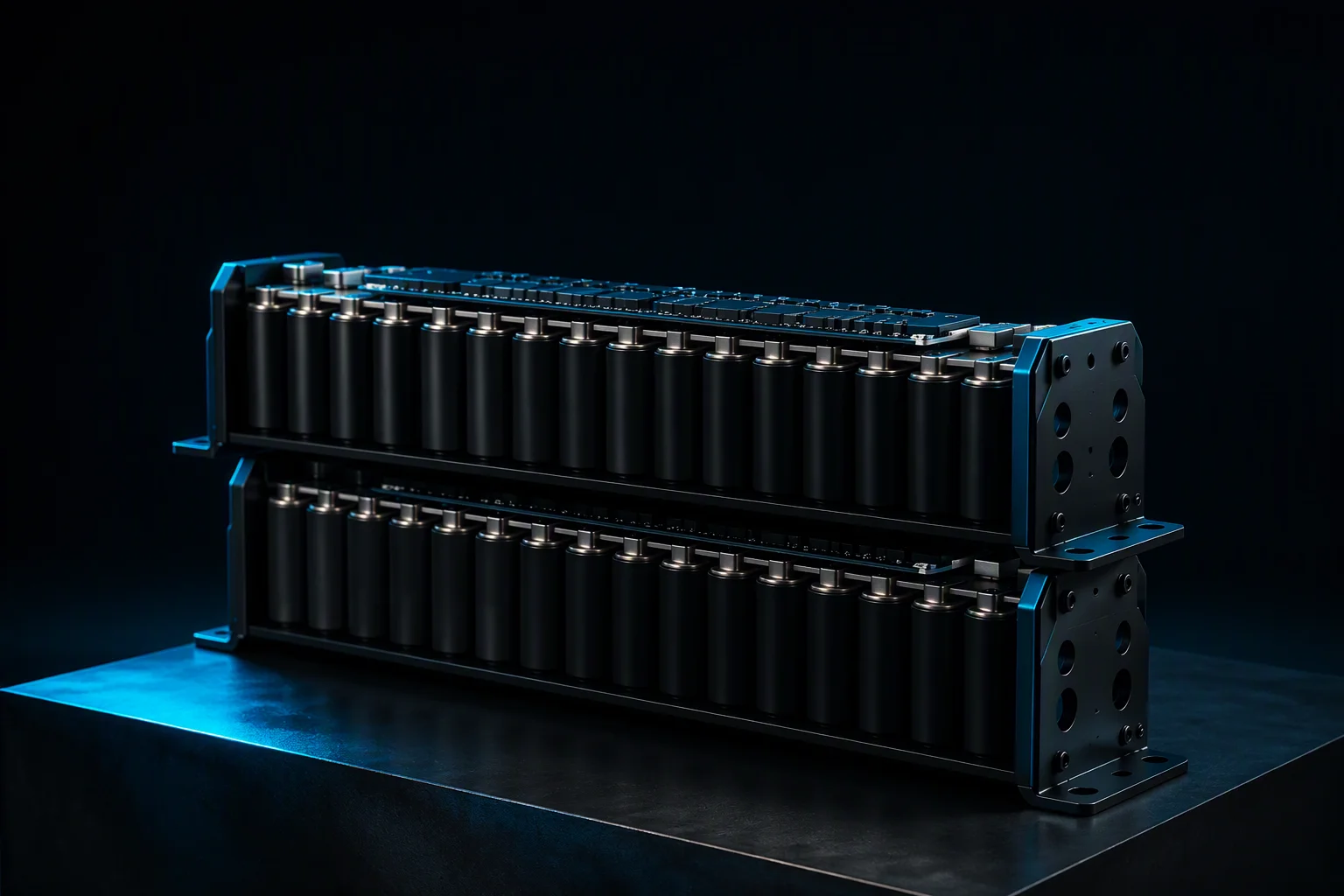
If your bus voltage lands between the standard modules — the 16–108 V band where most industrial ride-through actually lives — the custom & ODM route builds cell-to-cell on the same sorted, laser-welded line, first article in 8–12 weeks.
Related
Keep reading
AI POWER
Why GB300 made supercapacitors standard in AI racks
65 J/GPU and 30% peak shaving — the numbers behind the millisecond tier.
MANUFACTURING
Inside a supercapacitor module line
IQC, sorting, laser welding, BMS, aging, final test — six stations explained.
TECHNOLOGY
LIC vs EDLC vs Li-ion — the technology page
Mechanism cutaway, full comparison table and the cell trade-off quantified.

Chemistry decided
Three chemistries, one decision. Make it with data.
Send your bus voltage, window and cycle duty — the reply within 48 hours names the right chemistry and the module under it, with numbers attached.